How to use ube powder comes down to two methods: rehydrate it with water into a soft paste, or mix it straight into dry ingredients and drinks. Because the powder is concentrated, most published guides start small, around 3 g per drink or 1 to 2% of a dry mix. Below you will find starting amounts, step-by-step methods and fixes for the problems bakers run into most.
Two ways to use ube powder
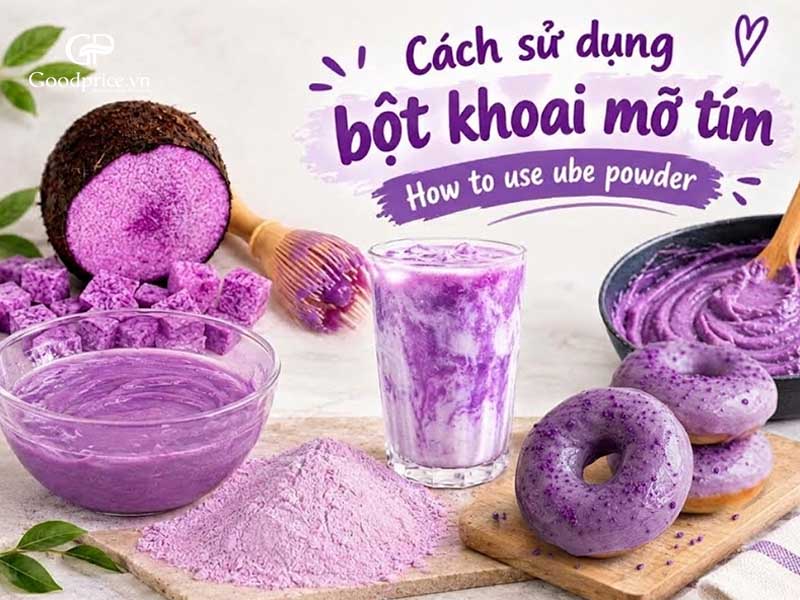
Knowing how to use ube powder starts with choosing the right form for your recipe:
- Rehydrated paste: Cook the powder with water until it tastes and feels like mashed ube. Use it for ube halaya, fillings, spreads and any recipe that calls for fresh or frozen grated ube.
- Dry powder: Sift it with flour for cakes, cookies and bread, or dissolve it in warm liquid for drinks and ice cream. This is the faster option and gives an even color.
How to rehydrate ube powder
Here is how to use ube powder as a paste, using the ratio from a widely shared rehydration method:
- Ratio: 50 g of ube powder to 240 ml of water, about 1 part powder to 5 parts water.
- Method: Put the powder in a saucepan, add the water and bring it to a boil, then lower the heat to medium and keep stirring.
- Done when: The paste feels soft and smooth with no grainy bits and tastes like mashed ube. If it is still grainy, cook it a little longer, check the texture again and note the timing for your next batch.
- Yield: 50 g of dry powder makes about 285 to 290 g of finished ube paste.
- Storage: Keep the paste in the fridge for up to one week or in the freezer for up to one month.
For a quicker version without the stove, some guides stir the powder into hot water or milk and let it sit for 10 to 15 minutes. This works for drinks and batters but gives a less smooth paste than cooking.
How much ube powder to use
Use these starting amounts from published dosage guides, then adjust to the color and flavor you want:
Use | Starting amount |
Hot latte, 250 ml | 2 to 3 g, about 1 teaspoon |
Iced latte, 300 ml | 3 to 6 g |
Smoothie, 300 ml | About 3 g |
Ice cream and custard | 1 to 2% of the base, about 22 g per liter of ice cream |
Cakes, muffins and cookies | 1 to 2% of the dry mix |
Pancakes, 8 servings | About 15 g |
Ube powders differ in strength from one producer to another, so treat these numbers as a starting point. For a new product, run a small test batch before you scale up.
How to use ube powder in baking
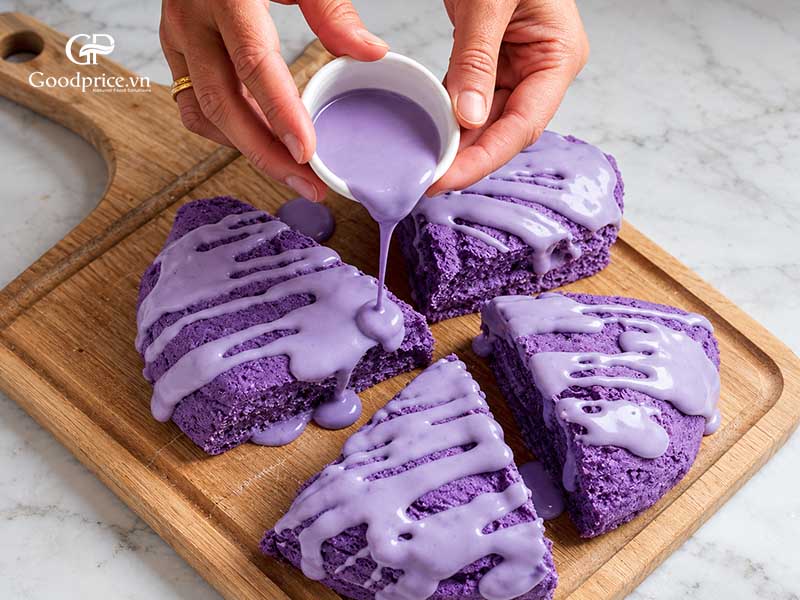
When you work out how to use ube powder in cakes, cookies and bread, you can add it dry or as a paste:
- Dry: Sift the powder together with the flour so it spreads evenly and does not form purple specks. A fine, even powder blends more easily, as we explain in how ube powder fineness affects your finished product.
- As a paste: Fold rehydrated ube into the batter or dough the same way you would add mashed pumpkin or sweet potato.
- Watch the liquid: The powder absorbs moisture, so a batter may need a little more liquid than the original recipe.
- Watch the leavening: Ube color comes from anthocyanins, which turn greenish in alkaline batters. Recipes with a lot of baking soda can lose their purple shade.
For ube cakes, one option is to use the dry powder in the sponge and the rehydrated paste in the filling or frosting. The sponge gets an even color, while the cream carries more of the ube flavor.
How to make ube halaya with ube powder
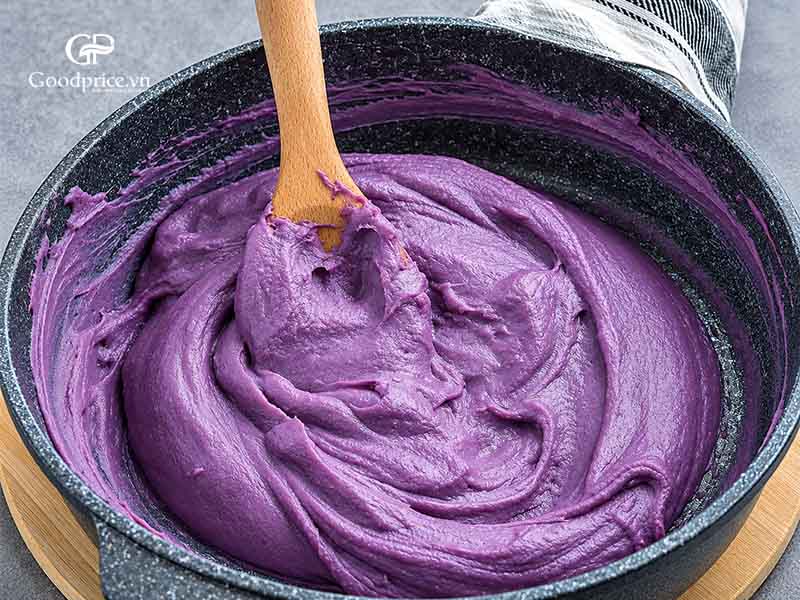
Ube halaya is the classic Filipino ube jam and a popular filling for sweet bread, steamed buns and modern mooncakes. Here is how to use ube powder to make it:
- Cook the base: Cook 100 g of ube powder with 500 ml of water until the mixture is thick and smooth.
- Add fat and sweetness: Lower the heat and add 120 g of sweetened condensed milk, 100 ml of coconut milk, 30 g of unsalted butter and 1 g of fine salt.
- Cook it down: Stir constantly over low heat for 15 to 20 minutes. The jam is ready when it pulls away from the pan, looks glossy and turns thick and stretchy.
- Store: Pour it into a clean glass jar, let it cool completely, then close the lid and keep it in the fridge.
How to use ube powder in drinks
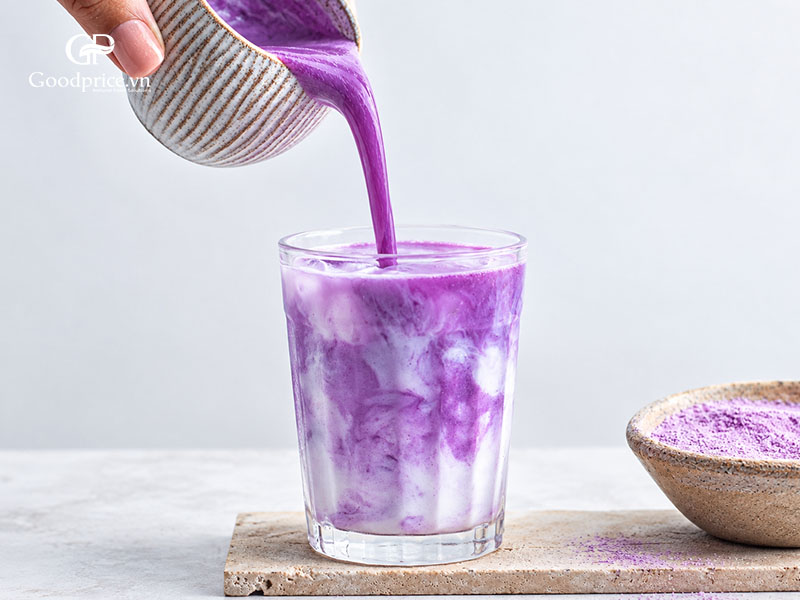
The key to how to use ube powder in drinks is a smooth base, so the powder does not clump:
- Make a paste: Mix the powder with a little hot liquid, around 60 °C, and stir until smooth.
- Add the rest: Pour in the milk or plant milk and stir or shake well. Always add powder to liquid, not liquid to powder.
- Sweeten to taste: Pure ube powder has no added sugar, so add syrup or sweetened milk as needed.
About 1 teaspoon per 250 ml latte is a common starting point.
Common problems and how to fix them
Most problems with how to use ube powder come from mixing or heat, not from the powder itself:
- Lumps: Make a paste with a small amount of warm liquid first, then add the rest gradually.
- Grainy texture: The paste needs more cooking time or a little more water. Keep stirring until it feels smooth.
- Sticky or slimy texture: Yam starch thickens as it cooks. Our article on whether ube powder becomes slimy explains why and how to control it.
- Greenish or dull color: Cut back on baking soda or add a little acid, and avoid long, high-heat baking where you can.
Conclusion
Now you know how to use ube powder in the two main ways: rehydrate it into a paste for halaya and fillings, or use it dry in baking and drinks. Start with small amounts, sift or make a paste to avoid lumps and keep an eye on baking soda to protect the purple color. If you need ube powder for production, see our pure ube powder from Vietnam and request a quote.
Frequently asked questions
Is ube powder real ube?
Pure ube powder is real purple yam that has been cooked, dried and milled. Check the ingredient list, since some ube drink mixes also contain sugar, flavoring or added color.
Is it better to use ube powder or extract?
They do different jobs. Extract adds strong flavor in a few drops, while powder adds flavor, color and body from the yam itself.
What does ube powder taste like?
It tastes mildly sweet and nutty with a soft vanilla-like note. The flavor is gentle, so it pairs well with coconut milk or condensed milk.