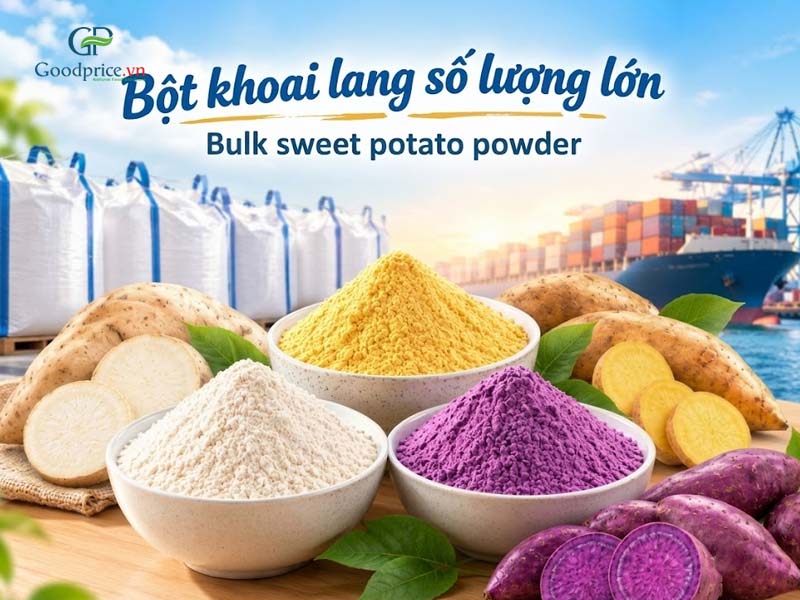
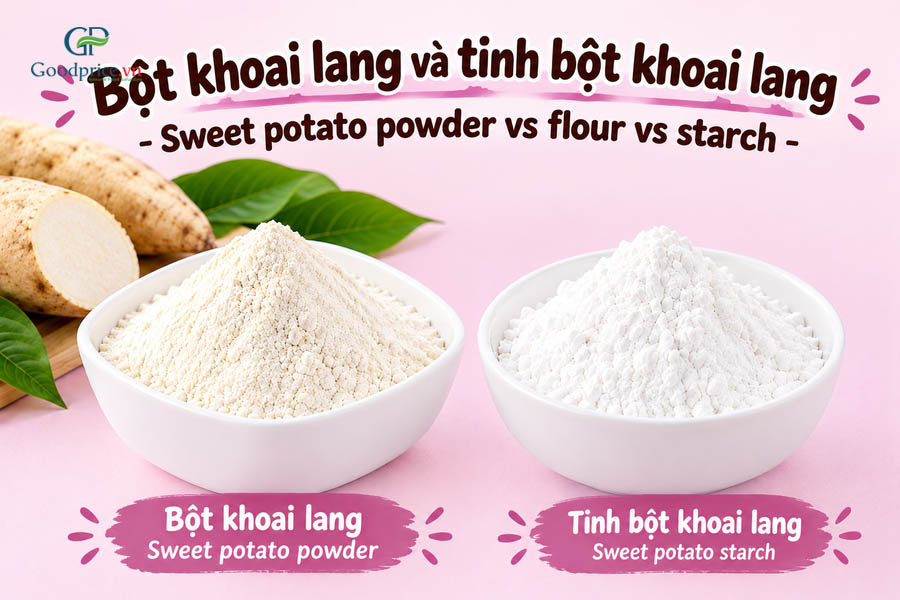
Sweet potato powder and sweet potato flour are the whole root, dried and ground, while sweet potato starch is only the starch washed out of the root. That is why powder keeps the color, flavor and fiber of the sweet potato, and starch is white, neutral and turns clear and chewy when cooked.
The two are not a 1:1 swap. This guide compares them side by side and shows which one your product needs. Goodprice Foods makes both, so you can source them from one supplier.
Sweet potato powder vs starch at a glance
The difference starts with how each one is made, and it carries through to color, taste and texture:
Criteria | Sweet potato powder or flour | Sweet potato starch |
Made from | The whole root | Only the starch inside the root |
How it is made | Cleaned, sliced, dried and ground | Ground with water, filtered, settled and dried |
What stays in | Starch, fiber, protein, natural pigments | Almost only starch |
Color | Yellow, off-white or purple, by variety | White |
Taste | Mild sweet potato flavor | Neutral |
When cooked | Opaque, soft body, keeps its color | Clear, glossy, chewy and elastic |
Main uses | Bakery, beverages, noodles, porridge, snacks | Glass noodles, crispy batter, thickening |
Name on a label | Sweet potato powder, sweet potato flour | Sweet potato starch |
In short, choose powder when you want the sweet potato itself in the product, and choose starch when you want texture without color or flavor.
What is sweet potato starch?
Sweet potato starch is the pure starch separated from the root, with most of the fiber and protein removed. On the market it is often sold as sweet potato starch powder. It is made by wet milling:
- Wash: The roots are washed to remove soil.
- Grind with water: The roots are ground or grated into a slurry.
- Filter: The pulp is screened out, leaving starch milk.
- Settle and wash: The starch settles, the water is drained off and the starch is washed again.
- Dry and mill: The wet starch is dried and milled into a fine white powder.
Because it is almost pure starch, it has no real flavor and turns clear, glossy and elastic when cooked in water. That makes it the base for sweet potato glass noodles, such as the noodles used in Korean japchae. It is also used for crispy frying batters and for thickening soups and sauces.
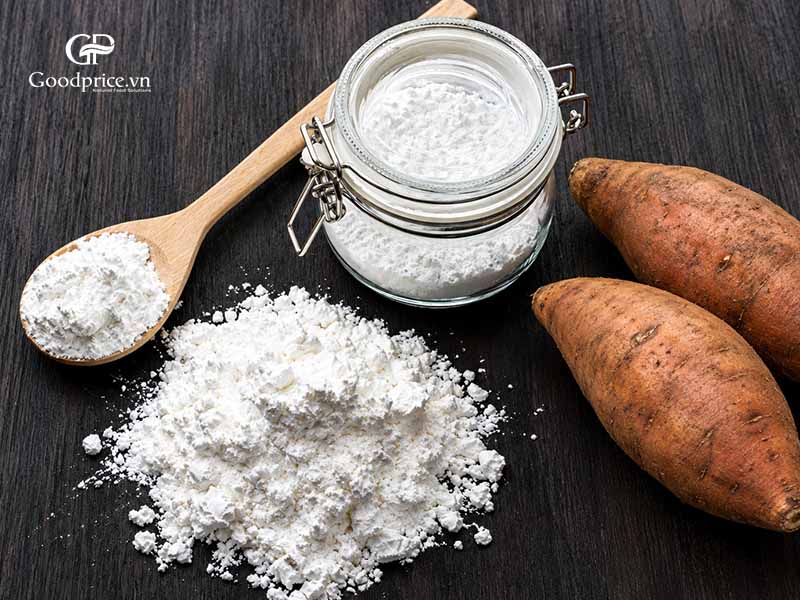
Goodprice Foods also produces sweet potato starch. The starch is washed and filtered through water seven times, then dried to a moisture of about 13%, and it is packed in 25 kg PP/PE bags for export.
Sweet potato flour vs sweet potato powder: is there a difference?
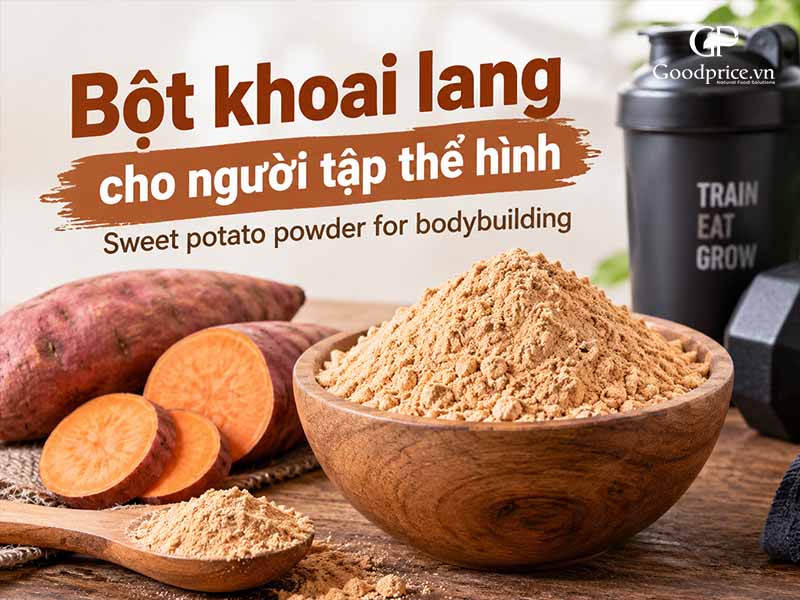
Sweet potato powder is the whole root dried and ground, so it keeps the fiber, protein, natural color and flavor that starch leaves behind. When you compare sweet potato flour vs sweet potato powder, you will usually find the same kind of product under two names.
In practice, the two names overlap. Some suppliers use flour for products aimed at baking and powder for finer grades used in drinks and color, but there is no fixed rule. When you buy, look at the spec and the ingredient list, not just the name.
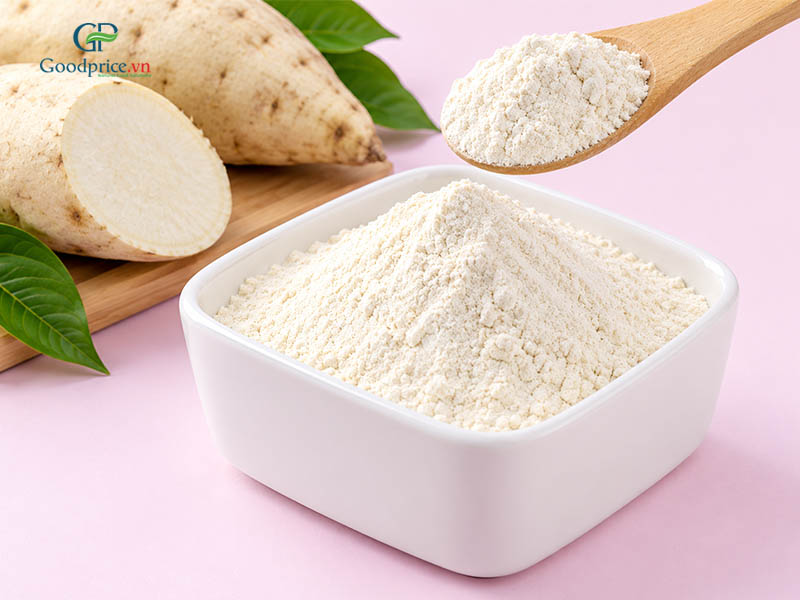
At Goodprice Foods, we make yellow and white sweet potato powder from 100% sweet potato, cold-dried and milled to 80 to 120 mesh, with a moisture of 10% or less. Nothing is extracted, so the powder keeps the natural color of each variety.
Can you use sweet potato powder instead of sweet potato starch?
Not one for one. They behave too differently, so a direct swap usually changes the product:
- Powder in place of starch: Glass noodles, chewy dumplings and clear sauces will turn cloudy, soft and colored, and they won’t stretch or bounce.
- Starch in place of powder: Cakes, drinks and porridge lose the sweet potato color, flavor and fiber, and the texture can turn gummy.
- Thickening: Powder does thicken, since it is mostly starch, but it also adds color and a mild flavor. Use starch when the sauce must stay clear.
- Blends: Many formulas use both, with powder for color and flavor and a little starch for chew or crispness.
Always run a small test batch before you change an ingredient in production.
Sweet potato powder or starch | which one does your product need?
The right choice depends on what the sweet potato has to do in your recipe:
- Choose starch when: You need chew, stretch, a clear gel or a crisp coating, and the sweet potato should not show. Examples are glass noodles, jellies and frying batter.
- Choose powder when: You want the sweet potato to be seen and tasted, with its color, flavor and fiber. Examples are bakery, beverages, noodles with natural color, porridge and snacks.
- Use both when: You want sweet potato color and flavor with a firmer or chewier texture, such as colored noodles or chewy snacks.
How to tell sweet potato powder and starch apart on a label
Sweet potato powder and starch can look alike in a bag, so check these points before you approve a supplier:
- Product name: Starch is labeled sweet potato starch. Powder may be labeled powder or flour.
- Color: Starch is bright white. Powder is yellow, off-white or purple depending on the variety.
- Ingredient list: Both should read 100% sweet potato, with no added fillers.
- Composition on the COA: Powder shows measurable fiber and protein. Starch shows almost none.
- Sample test: Ask for a sample of each and compare them in your own process. That is a reliable way to see which one fits.
Conclusion
Sweet potato powder and flour bring the whole root, with its color, flavor and fiber, while sweet potato starch brings clear, chewy texture without color or flavor. Choose by what the ingredient has to do in your product, and check the spec rather than the name.
If your formula needs the sweet potato itself, you can review our white sweet potato powder for a neutral color and our yellow sweet potato powder for a natural yellow tone. If you need sweet potato starch powder, contact us for its spec and a quotation.
Frequently asked questions
Is sweet potato starch the same as sweet potato flour?
No. Flour is the whole root dried and ground, while starch is only the starch extracted from the root. Starch has almost no fiber, protein or flavor.
What is sweet potato starch used for?
It is mostly used for glass noodles, crispy frying batters and thickening soups and sauces, where a clear, chewy texture matters.
Are sweet potato powder and starch gluten-free?
Both are naturally gluten-free. If your product needs a gluten-free label, ask for a certified product to rule out cross-contact.
Can sweet potato powder thicken sauces?
Yes, it can, because it is mostly starch. It will also add color and a mild sweet potato flavor, so use starch if the sauce must stay clear.
How is sweet potato starch made?
The roots are ground with water, the pulp is filtered out, and the starch is left to settle, then washed and dried into a fine white powder.