Ube vs taro is not a choice between two names for the same root. Ube is a purple yam with deep violet flesh and a sweet, vanilla-like taste, while taro is a starchy corm with pale flesh and a nuttier, earthier flavor.
Below, we compare taro vs ube side by side and show which powder fits bubble tea, lattes and desserts, how to blend them and how to label the finished product.
Ube vs taro – Two different plants
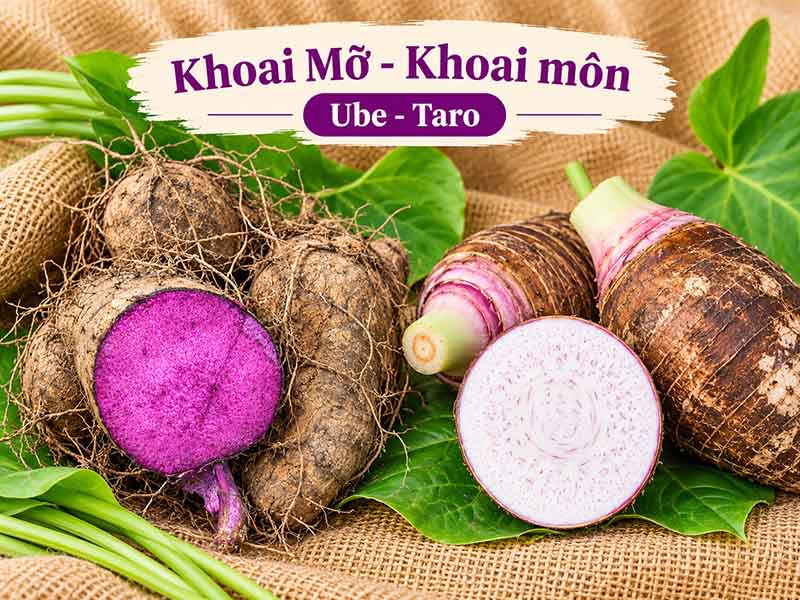
The biggest difference between ube vs taro starts in the field. They come from two unrelated plant families:
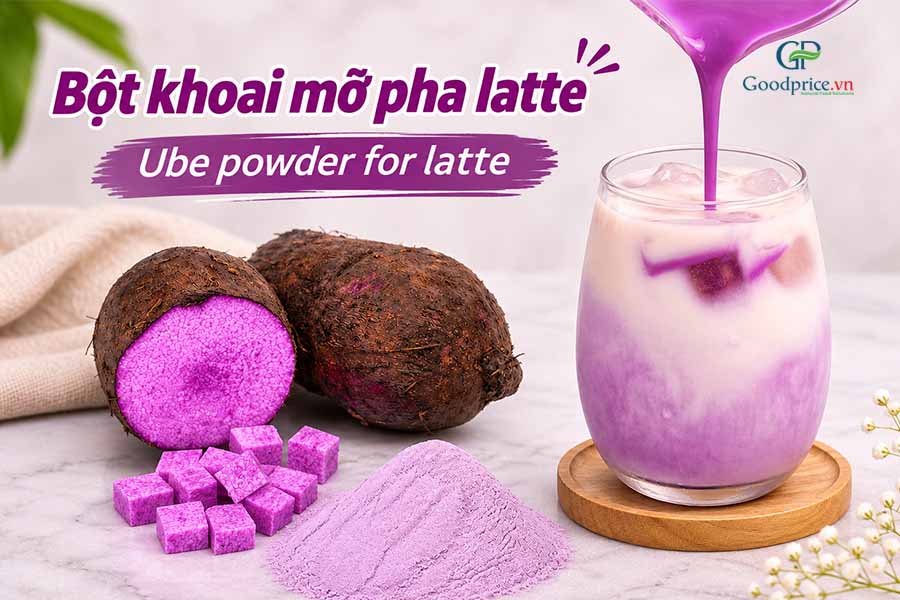
- Ube: Ube (Dioscorea alata) is a purple yam from the yam family. It grows on a climbing vine and forms a large tuber. Some types are white inside, but ube refers to the purple-fleshed kind, which is purple all the way through. It is closely tied to Filipino desserts such as ube halaya.
- Taro: Taro (Colocasia esculenta) belongs to the arum family and is grown across Asia, Africa and the Pacific Islands. The part we eat is a corm, a swollen underground stem, under large heart-shaped leaves.
Ube is simply the Filipino name for purple yam, so ube vs taro vs purple yam is really a comparison of two roots, not three. Purple sweet potato (Ipomoea batatas) is a third purple root from yet another plant family, and it is often mixed up with both.
Raw taro contains calcium oxalate crystals that irritate the mouth and throat, so taro must always be cooked before eating.
Ube vs taro taste and texture
The taro vs ube taste difference is easy to notice once you try them side by side. In short, ube is sweeter than taro:
- Ube flavor: Gently sweet and nutty, often compared to vanilla. It reads as a dessert flavor on its own.
- Taro flavor: Less sweet, nutty and a little earthy, closer to potato or chestnut. It works in both sweet and savory food.
- Texture: Cooked ube is smooth and creamy. Taro is starchier and denser, which gives drinks and fillings a thicker, more filling body.
Ube powder vs taro powder color
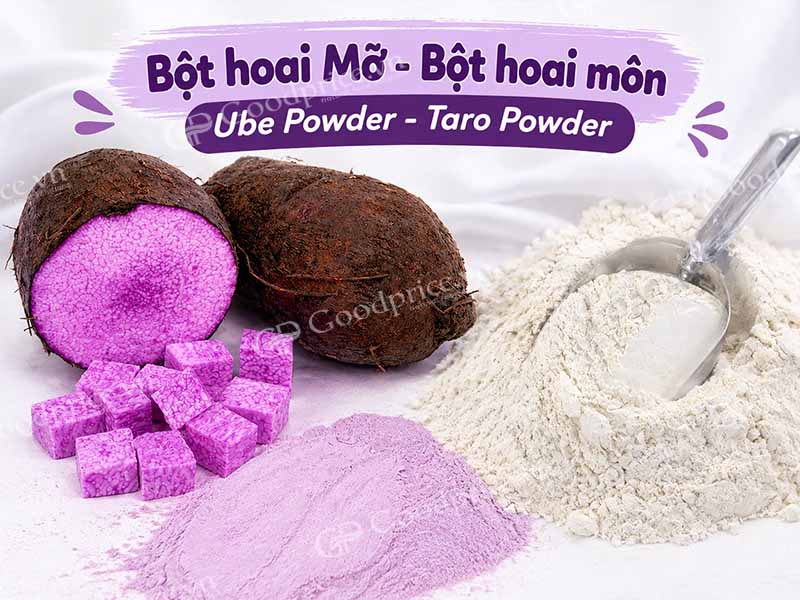
Color is where most of the confusion comes from. Ube gets its deep purple from natural anthocyanins in the flesh. Taro flesh is white or pale lilac with purple flecks, so a pure taro powder gives a much paler shade.
That is why a bright purple taro milk tea usually has color added to the powder or the drink. If the color matters for your menu, check the ingredient list rather than the shade in the cup.
Ube color also changes with pH. In acidic mixes it leans pink or red-violet, while in alkaline batters with a lot of baking soda it can turn grey or greenish.
Ube vs taro at a glance
Here is how ube vs taro compares on the points that matter for a menu or a production line:
Criteria | Ube | Taro |
Plant | Dioscorea alata, yam family | Colocasia esculenta, arum family |
Natural color | Deep purple throughout | White or pale lilac with purple flecks |
Flavor | Sweet, nutty, vanilla-like | Mildly sweet, nutty, earthy |
Texture | Smooth, creamy | Starchy, dense |
Sweet or savory | Mostly sweet | Both |
Color from the powder alone | Strong purple | Pale shade |
Ube vs taro for bubble tea, lattes and desserts
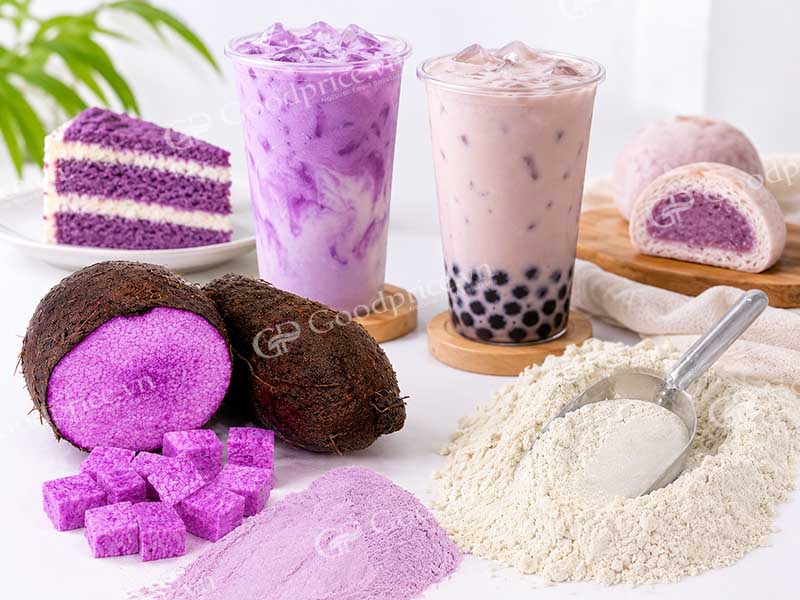
In the ube vs taro bubble tea choice, taro powder vs ube powder depends on whether you sell the color, the body or the flavor:
- Choose ube powder when: You want a naturally purple drink without added color, a sweet dessert-like flavor and a smooth latte that looks good on camera.
- Choose taro powder when: Your customers expect the classic nutty taro milk tea, you want a thicker, more filling drink or you also make savory items such as taro snacks or fillings.
- Desserts and fillings: Ube suits cakes, ice cream, halaya and purple layers. Taro suits mooncake and bun fillings, taro paste and ice cream with a nuttier taste.
Ube taro powder blends
Some shops and brands combine both in one ube taro powder blend. Taro brings body and a nutty base, while ube adds natural purple and a sweeter top note.
There is no single standard ratio. Start with a small test batch, change one powder at a time and check color, sweetness and thickness in the final drink, not in the dry mix. Particle size also matters here, since a finer powder disperses more evenly in cold drinks (see how ube powder fineness affects the finished product).
Labeling ube vs taro products
Customers who know the taro vs ube difference will check the label, so it should match what is in the pack:
- Name the root correctly: Ube is purple yam, taro is taro. Calling a taro drink ube, or the other way round, misleads buyers.
- List ingredients by weight: Ingredients appear from most to least. In a blend, the first root on the list is the main one.
- Flag flavorings: Under US rules (21 CFR 101.22), a product whose taro or ube taste comes from artificial flavor must say artificial or artificially flavored next to the flavor name.
- Name the colors: Certified colors are listed by name, such as Red 40 or Blue 1. Other added colors can be listed as color added or by their specific name.
When you source in bulk, ask for a specification sheet that confirms the raw material. You can also see how we handle ube powder export from Vietnam.
Conclusion
Ube vs taro comes down to what your product needs. Ube gives natural purple and a sweet, dessert-like taste, while taro gives a nutty flavor, a thicker body and works in savory food too. If you are sourcing for production, take a look at our pure ube powder, made from 100% purple yam with no added color, and our taro powder, made from 100% taro with no preservatives or flavorings.
Frequently asked questions
Are taro and ube the same?
No. Ube is a purple yam (Dioscorea alata) and taro is a corm from a different plant family (Colocasia esculenta). They differ in color, flavor and texture.
What tastes better, ube or taro?
It depends on the product. Ube is sweeter and vanilla-like, so it suits desserts and lattes, while taro is milder and nuttier and suits classic milk tea and savory food.
What is healthier, taro or ube?
Neither is clearly healthier. Both are starchy roots that mainly provide carbohydrates and some fiber. The visible difference is that ube carries anthocyanins, the natural pigments behind its purple color.
Is ube Filipino or Japanese?
Ube is Filipino. The word comes from Tagalog and the purple yam is a staple of Filipino desserts. It is often confused with Okinawan purple sweet potato, a different plant used in many Japanese purple sweets.
Why is taro bubble tea purple?
Taro flesh is only pale lilac, so a deep purple taro drink usually contains added color. A drink made with pure taro powder looks much lighter.