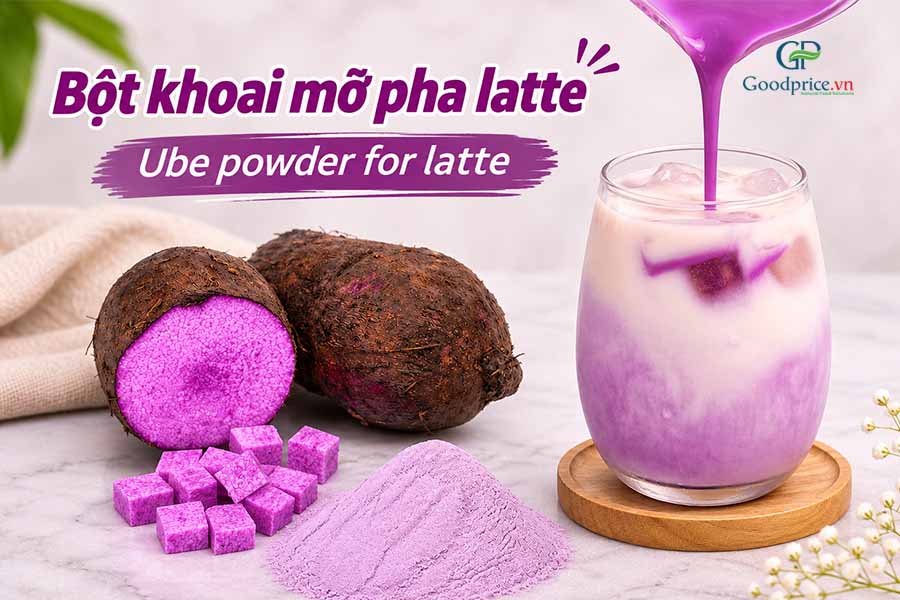
When it comes to ube vs purple sweet potato, the short answer is that they are not the same thing, and neither are their powders. Ube powder is made from purple yam (Dioscorea alata), while purple sweet potato powder comes from Ipomoea batatas, a root from a completely different plant family. The two differ in flavor, shade of purple and the products they suit best.
At Goodprice Foods we make both purple sweet potato powder and ube powder in Vietnam, so here is how we tell them apart in the kitchen and on the production line.
Is purple sweet potato powder the same as ube?
No. The two powders come from two different plants:
- Ube (purple yam): A member of the yam family (Dioscoreaceae), native to Southeast Asia. It is best known around the world for traditional Filipino ube desserts.
- Purple sweet potato: A member of the morning glory family (Convolvulaceae), the same species as the familiar yellow and orange sweet potatoes.
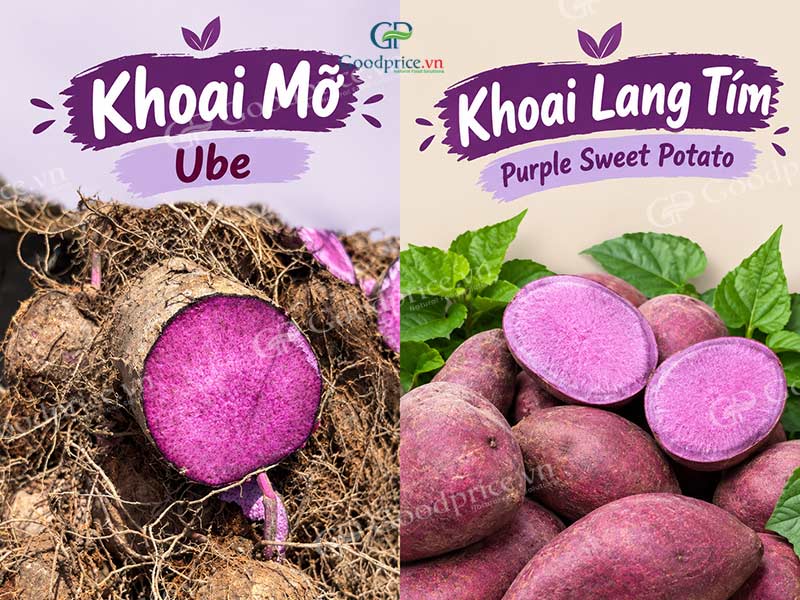
The mix-up happens because both roots have purple flesh and both turn into purple powders. Many baking recipes and trade documents even use the two names interchangeably, which leads to ordering the wrong ingredient and getting the wrong flavor.
Ube vs purple sweet potato powder at a glance
Here is a quick look at ube powder vs purple sweet potato powder side by side:
Feature | Ube powder | Purple sweet potato powder |
Plant | Purple yam, Dioscorea alata | Purple sweet potato, Ipomoea batatas |
Plant family | Yam family | Morning glory family |
Color | Bright lavender to pinkish purple | Deeper, darker purple |
Flavor | Mildly sweet and nutty with a vanilla-like note | Earthy, classic sweet potato taste |
Fresh root texture | Moist and smooth | Drier and more fibrous |
Main pigments | Anthocyanins, mostly alatanins | Anthocyanins, a different set of compounds |
Typical uses | Ube desserts, lattes, ice cream, cakes | Bakery, noodles, drinks, snacks, savory dishes |
Ube vs purple sweet potato powder – How do they taste and look different?
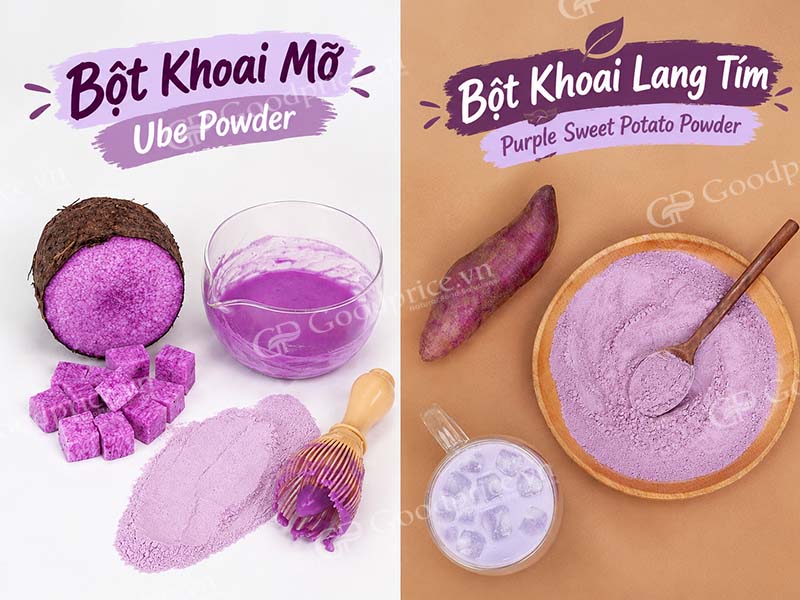
Flavor
Ube tastes mildly sweet and rich, with a soft vanilla-like aroma. That aroma is what makes ube powder the heart of ube halaya, ice cream and sweet pastries.
Purple sweet potato powder keeps the rustic, nutty taste of a regular sweet potato. This simple flavor blends into both sweet and savory recipes without overpowering the main flavors.
Shade of purple and color changes
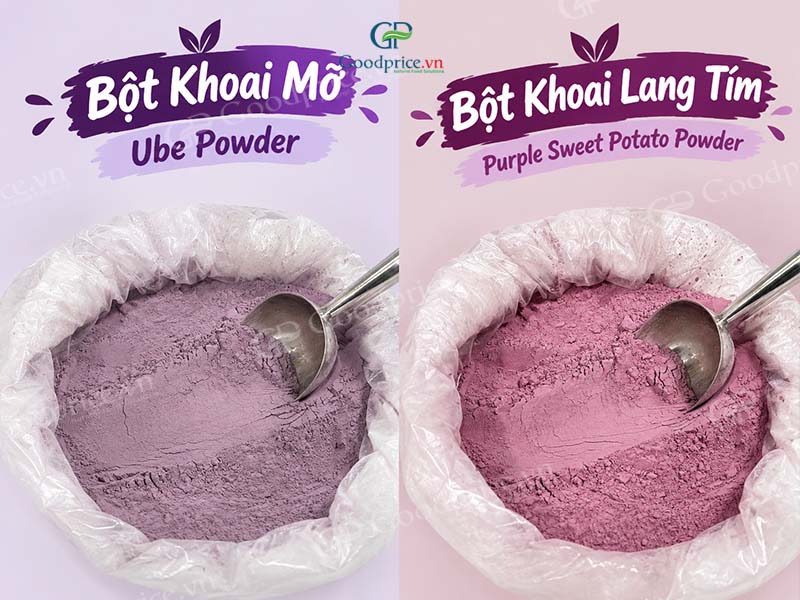
- Shade: Ube powder gives a soft pastel purple with a pink tint. Purple sweet potato powder gives a deep, dark purple.
- pH reaction: The anthocyanins in both roots change color with the pH of the mix. Acids like lemon juice or yogurt turn the color bright pinkish red. Alkaline ingredients like baking soda shift it to grayish blue or olive green.
If you work with colored drinks, our guide to purple sweet potato powder for drinks covers this in more detail.
Is ube healthier than purple sweet potato?
In the ube vs purple sweet potato nutrition question, neither one is clearly healthier. Both are starchy root vegetables that provide carbohydrates, fiber, potassium and anthocyanins. Anthocyanin levels in both vary a lot with the variety, growing conditions and processing. For example, lab tests on Thai purple yams found anywhere from about 10 to 90 mg per 100 g of dry weight, a range that overlaps with values reported for purple sweet potato flour.
So the better choice depends on the flavor and color you want, not on a clear nutrition gap. Both are food ingredients, not treatments for any health condition.
Which powder should you choose for your product?
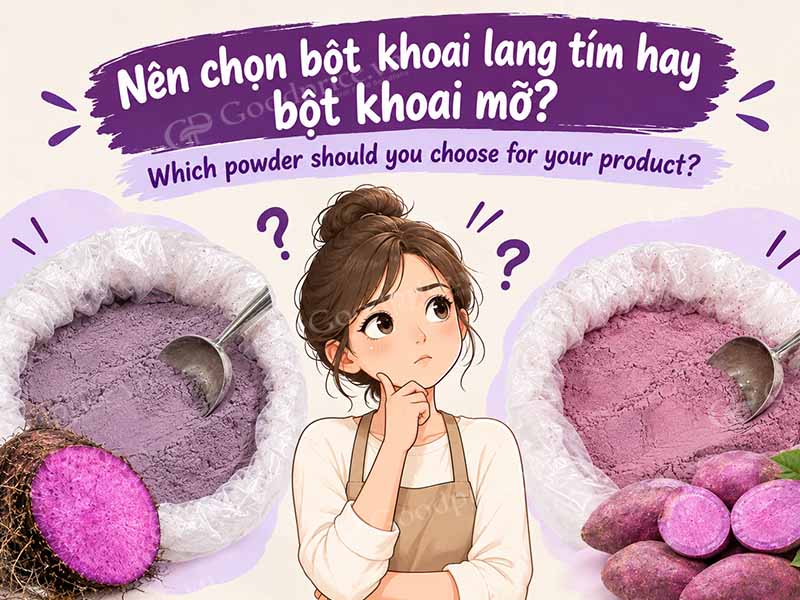
For a food business, the ube vs purple sweet potato choice comes down to what your customer expects to taste and see:
- Choose ube powder when: Your product is sold as ube. Ube lattes, ube cakes, ube ice cream and Filipino desserts depend on that mild vanilla-like flavor and the lighter lavender color.
- Choose purple sweet potato powder when: You want a deeper purple, a familiar sweet potato taste or a color that works in both sweet and savory products such as bread, noodles, dumplings and snacks.
- Be transparent on the label: If your recipe uses purple sweet potato powder, say purple sweet potato on the packaging and menu. Customers who know ube will taste the difference if it is sold as ube, and that can hurt your brand’s credibility.
- Run a pilot batch before scaling up: Always test on a small scale to check how stable the color stays under oven heat and the acidity of your recipe.
If you are comparing suppliers as well as ingredients, our criteria for choosing purple sweet potato powder can help you check quality and paperwork.
Okinawan sweet potato and taro – Other purple roots that get mixed up
Two more roots often get confused with ube:
- Okinawan sweet potato: Despite the purple flesh, it is a purple sweet potato (Ipomoea batatas), not ube. Powders labeled Okinawan or Japanese purple sweet potato are purple sweet potato powders.
- Taro: Taro (Colocasia esculenta) comes from yet another plant family. Its flesh is white or pale lilac with purple flecks, and it has a nutty, starchy taste. Taro powder is popular in milk tea and pastry fillings, and we also make taro powder for these uses.
Our ube and purple sweet potato powder specs
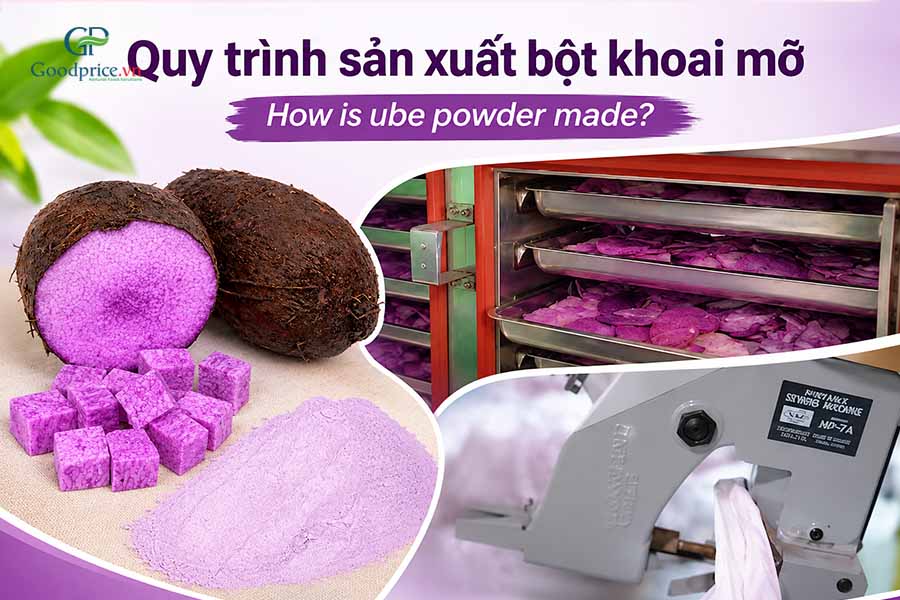
Our ube powder vs purple sweet potato powder specs are below. Both are made in Vietnam from fresh roots, steamed and then cold-dried to protect their natural color.
Spec | Ube powder | Purple sweet potato powder |
Raw material | 100% fresh purple yam, Dioscorea alata L. | 100% fresh purple sweet potato |
Processing | Steamed, cold-dried, finely milled | Steamed, cold-dried, finely milled |
Moisture | 10% or less | Under 10% |
Particle size | 80 to 120 mesh | 80 to 120 mesh |
Shelf life | 12 months | 12 months |
Minimum order | From 10 kg | From 10 kg |
Our powders are produced under ISO 22000:2018 in an FDA-registered facility. Steaming before drying matters for both roots, since it slows the browning enzymes that would otherwise dull the purple color.
Frequently asked questions
Can I use purple sweet potato powder instead of ube powder?
You can use it for color, but the taste will be different. Purple sweet potato powder gives a deeper purple and an earthier flavor, so the result will not taste like ube.
Is ube powder still healthy?
Ube powder is simply the dried and milled yam, so it still contains the fiber and minerals of the root. How healthy the final product is depends mostly on how much sugar and fat you add.
What’s better, ube extract or ube powder?
They do different jobs. Ube extract is a concentrated flavoring, and it often contains added color. Ube powder is the whole dried root, so it adds flavor, color and body at the same time.
Conclusion
The ube vs purple sweet potato question has a simple answer. They look alike but come from different plants, taste different and give different shades of purple. Choose ube powder when your product needs the true ube flavor, and purple sweet potato powder when you want a deeper purple and a familiar sweet potato taste. If you are not sure which one fits your recipe, contact us for a quote on our ube powder and purple sweet potato powder and test them side by side.