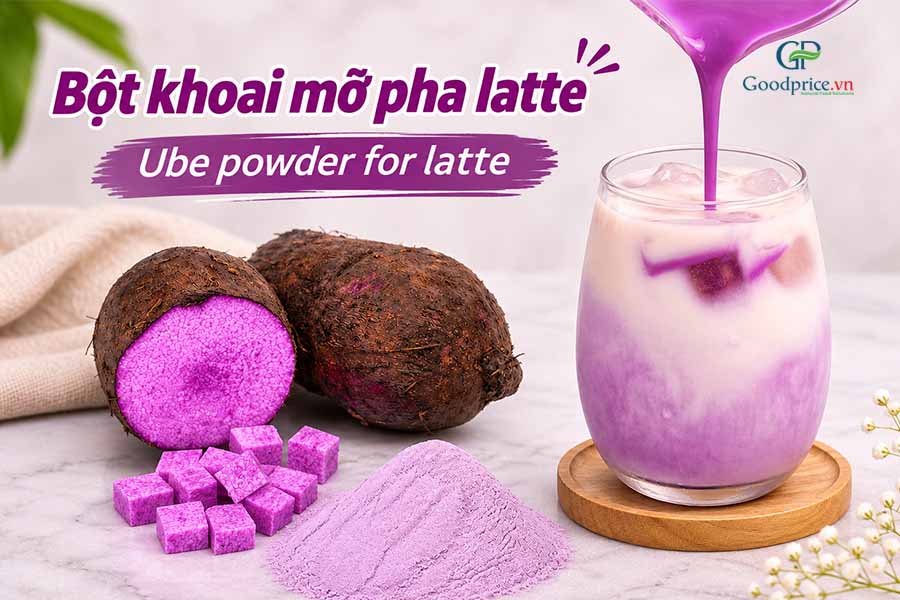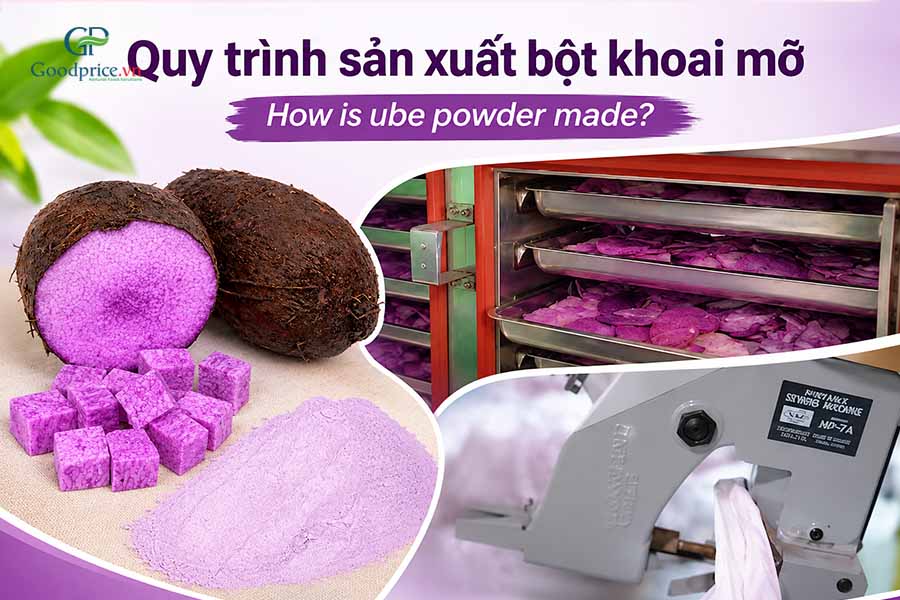
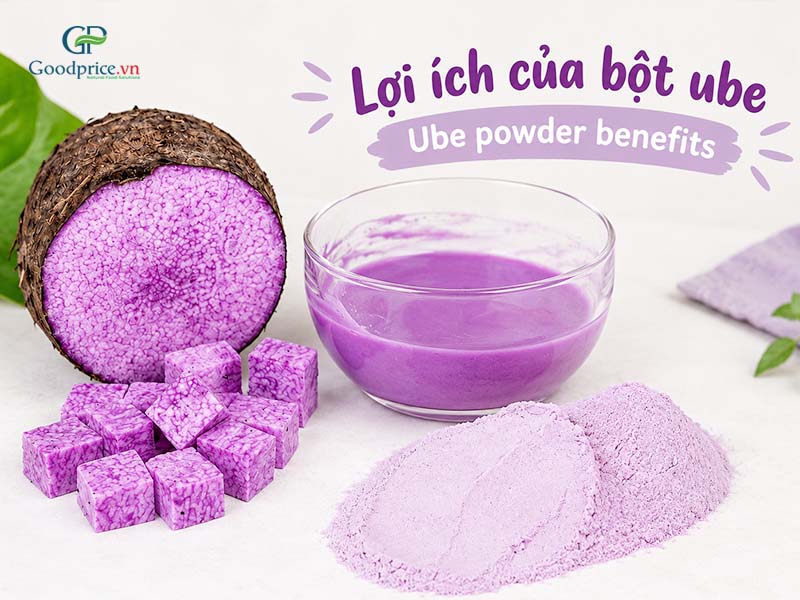
Ube powder benefits come from the purple yam itself: natural purple color, fiber, potassium and a mild vanilla-like flavor in a shelf-stable form. For food manufacturers, that means color, flavor and body from one ingredient.
We make pure ube powder in Vietnam, and this guide shares sourced nutrition facts plus what we see on the production line.
Is ube powder good for you?
Yes, as a food ingredient. Ube powder is simply purple yam that has been steamed, dried and milled, so it keeps the carbohydrates, fiber and minerals of the root. It contains no added sugar or color when it is pure, and those whole-root nutrients are the base of most ube powder benefits.
How healthy the final product is depends mostly on the recipe. An ube latte or ube cake can carry a lot of sugar and fat, and that matters more than the ube itself. Ube is a food, not a treatment for any health condition.
Ube nutrition facts
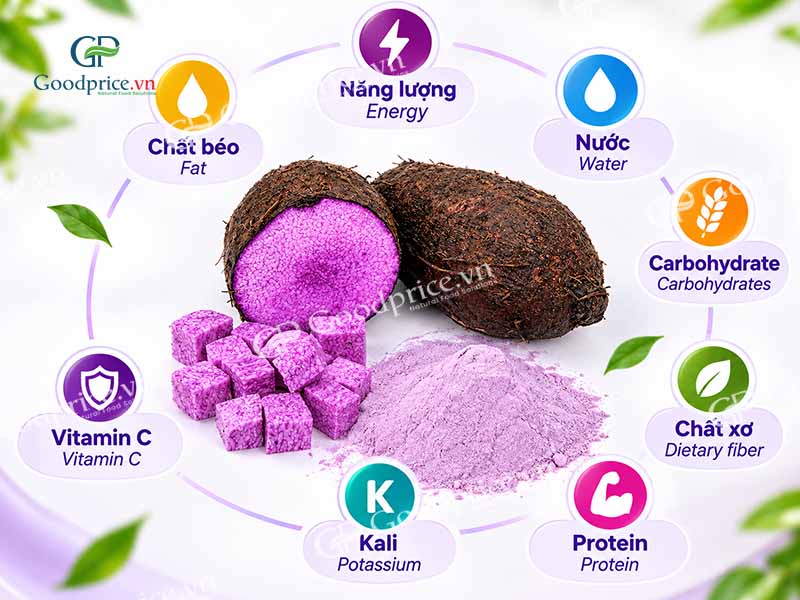
To understand ube powder benefits, start with the root. The table below uses USDA data for yam (Dioscorea species), per 100 g:
Nutrient | Raw yam | Cooked yam |
Energy | 118 kcal | 114 kcal |
Water | 69.6 g | 70.1 g |
Carbohydrates | 27.9 g | 27.0 g |
Dietary fiber | 4.1 g | 3.9 g |
Protein | 1.5 g | 1.5 g |
Fat | 0.2 g | 0.1 g |
Potassium | 816 mg | 670 mg |
Vitamin C | 17.1 mg | 12.1 mg |
Source: USDA FoodData Central, yam raw and yam cooked. These values describe the fresh root, not the powder.
Ube powder holds 10% moisture or less, while fresh yam is about 70% water. Drying concentrates the solids about three times, mostly starch, fiber and minerals.
Heat-sensitive nutrients like vitamin C, however, drop noticeably during cooking and drying, so the powder does not keep the vitamin C level of the fresh root. For accurate formulas and nutrition labels, run a nutrition analysis on your own finished product.
Key components behind ube powder benefits
Ube powder benefits come mainly from four core components:
- Anthocyanins: The pigments behind ube’s purple color, mostly alatanins. They have natural antioxidant activity, and levels vary by variety.
- Resistant starch: A slowly digested starch that behaves much like fiber in the gut.
- Dietary fiber: About 4 g per 100 g of fresh yam, concentrated about three times in the powder.
- Potassium: A naturally high 816 mg per 100 g of fresh yam.
Be careful with health promises on your packaging. Effects on blood sugar, blood pressure or appetite have only been seen in lab and animal tests with concentrated extracts, with no clinical trials on people eating pure ube powder. They help position a natural product, but they are not a basis for promising medical effects.
Functional benefits of ube powder for food manufacturers
For a food business, the most useful ube powder benefits are practical ones:
- Natural purple color: It colors drinks, doughs and fillings without synthetic dyes. Like all anthocyanin colors, it turns pinker in acidic recipes and bluish in alkaline ones, so test the shade in your own formula.
- Signature flavor: Its mild, nutty, vanilla-like taste is what customers expect from anything sold as ube.
- Body and texture: The natural starch adds body to fillings, ice cream and drinks. If you are worried about a sticky texture, our article on whether ube powder becomes slimy explains what causes it.
- Simple ingredient list: A pure powder is one ingredient, purple yam, which fits clean-label products.
- Naturally gluten-free: Yam contains no gluten, so the powder suits gluten-free recipes as long as your line controls cross-contact.
- Easy storage and dosing: Low moisture keeps the powder stable for 12 months, and a fine, even particle size blends evenly. Here is how ube powder fineness affects your finished product.
Where ube powder adds value in your product range
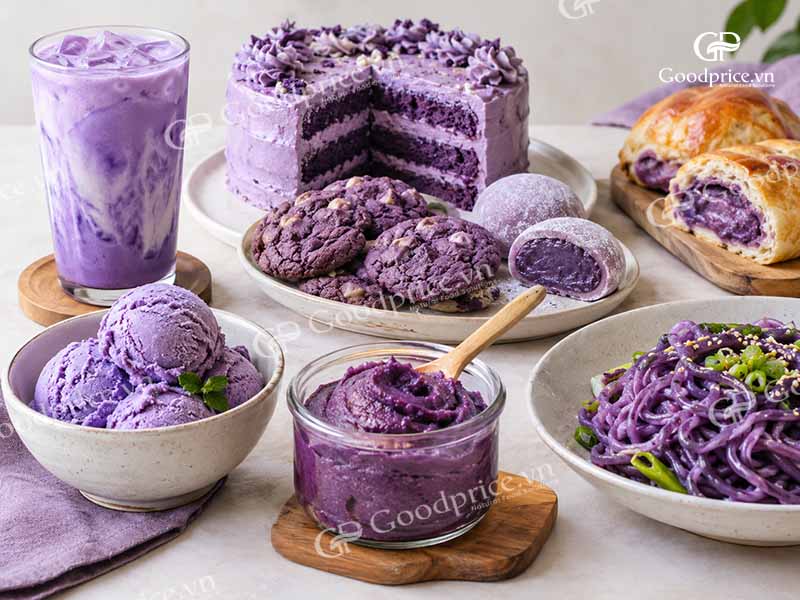
You get the most out of ube powder benefits in products where you want a natural purple color and a sweet, mellow flavor:
- Drinks: Lattes, milk tea, smoothies and cold foam.
- Bakery: Sponge cakes, bread, cookies and mochi.
- Frozen desserts: Ice cream and soft serve.
- Fillings and spreads: Ube halaya, pastry fillings and mooncakes made with ube powder.
- Snacks and noodles: Purple noodles, crackers and coated snacks.
What to keep off your label
Ube powder benefits are real, but most of them belong in your product story, not in health promises on the pack. Keep these points in mind:
- Describe, do not promise: Purple yam powder, natural color from purple yam and no artificial colors are factual descriptions. Promises about blood sugar, immunity or weight loss are not.
- Use your own numbers: Nutrition statements such as high in fiber need lab results from your finished product and must follow the rules of each market you sell in.
- Name it correctly: If your product uses ube powder, call it ube or purple yam. Do not use the name ube for products colored with other purple ingredients.
Conclusion
The real ube powder benefits for a food business are natural color, a signature flavor, body and a short ingredient list, backed by the fiber and minerals of purple yam. Use sourced nutrition data, keep health promises off your label and test the color in your own recipe.
If you want these ube powder benefits in your own products, our powder is steamed, cold-dried and milled to 80 to 120 mesh. It is made under ISO 22000:2018 in an FDA-registered facility and is HALAL certified. See the full specs and request a quote for bulk ube powder from Vietnam, or read about our ube powder export options.
Frequently asked questions
Does ube have side effects?
Ube is a common food and is well tolerated by most people. Allergic reactions are rare but possible, so anyone who reacts to it should stop eating it.
Which is healthier, ube or taro?
Neither is clearly healthier. Both are starchy roots with similar calories and fiber. The main difference is color: ube is deep purple all the way through, while taro is white or pale lilac with purple flecks, so it gives a much lighter purple.
Are ube powder benefits the same as fresh ube?
Mostly. The powder keeps the starch, fiber and minerals of the root in a more concentrated form, but some vitamin C is lost during steaming and drying.
Does ube powder have sugar?
Pure ube powder has no added sugar, and fresh yam is naturally very low in sugar. Many ube drink mixes do contain added sugar, so check the ingredient list.