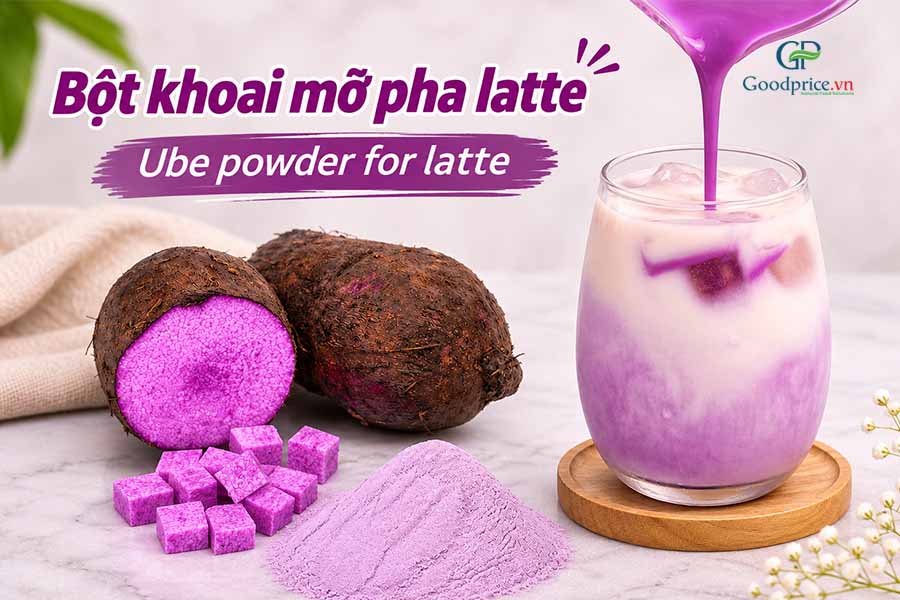
Purple sweet potato is a sweet potato with deep purple flesh, and it is often mistaken for ube. This guide explains what it is, how to tell it apart, and what is inside it. It is written by Goodprice Foods, a Vietnamese food ingredient manufacturer that turns purple sweet potato into powder.
What is purple sweet potato?
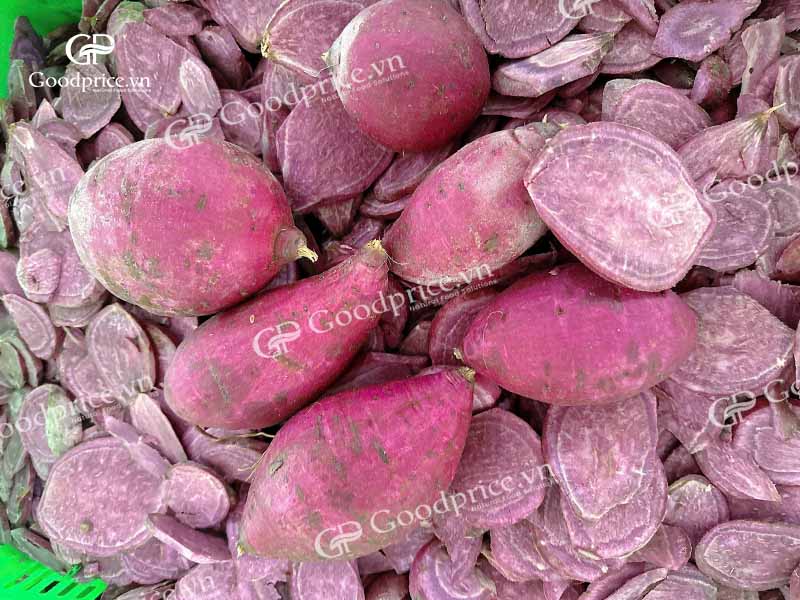
Purple sweet potato is a type of sweet potato (Ipomoea batatas) whose flesh is deep purple because it is rich in anthocyanin pigments. It belongs to the morning glory family, Convolvulaceae. The part you eat is a storage root, not a stem tuber.
Look at the flesh, not the skin. Skin color depends on the variety and ranges from beige to brown. The purple runs all the way through the flesh.
- English name: purple sweet potato.
- Other name: purple-fleshed sweet potato.
- Trade names: in international markets you will also see Okinawan sweet potato and Stokes Purple. These are specific varieties, not true synonyms, so confirm which one a supplier means when you order.
Purple sweet potato is often confused with ube, a different plant altogether.
Purple sweet potato vs ube: two different plants
Purple sweet potato and ube are two completely different roots. Purple sweet potato is a sweet potato (Ipomoea batatas), while ube is a yam (Dioscorea alata) from an unrelated plant family.
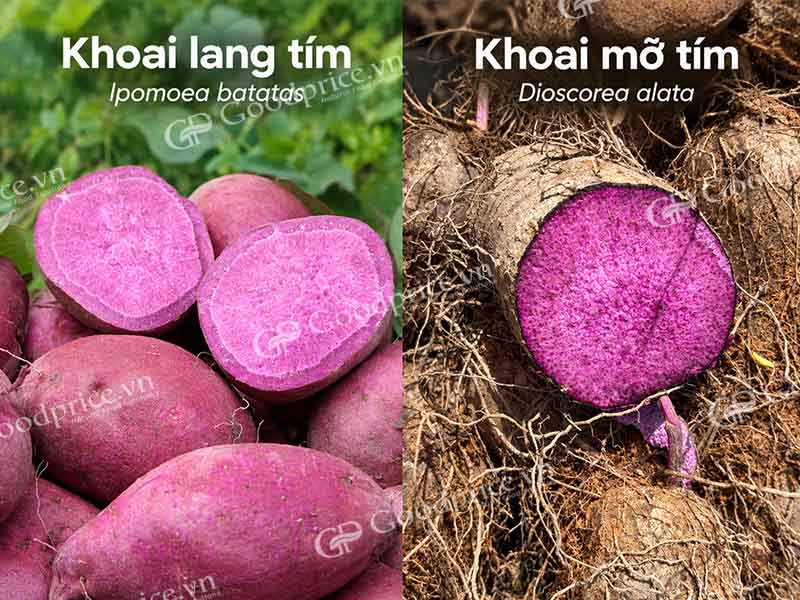
Feature | Purple sweet potato | Ube (purple yam) |
Species | Ipomoea batatas | Dioscorea alata |
Plant family | Convolvulaceae (morning glory) | Dioscoreaceae (yam) |
Skin | Thin, smooth, beige to brown | Thick, rough, bark-like |
Flesh color | Uniform deep purple | Light lavender to vivid purple |
Cooked texture | Dry, fluffy | Moist, firm |
Origin | Tropical Central and South America | Native to Southeast Asia |
Why are they easy to confuse?
- Similar color: the purple flesh of both roots looks alike.
- Shared name: in some international markets, “purple yam” is used loosely for both.
The two roots taste and cook differently, so they should not be swapped for each other. When ordering ingredients for a plant or a kitchen, name the species, not just the color.
What is inside a purple sweet potato?
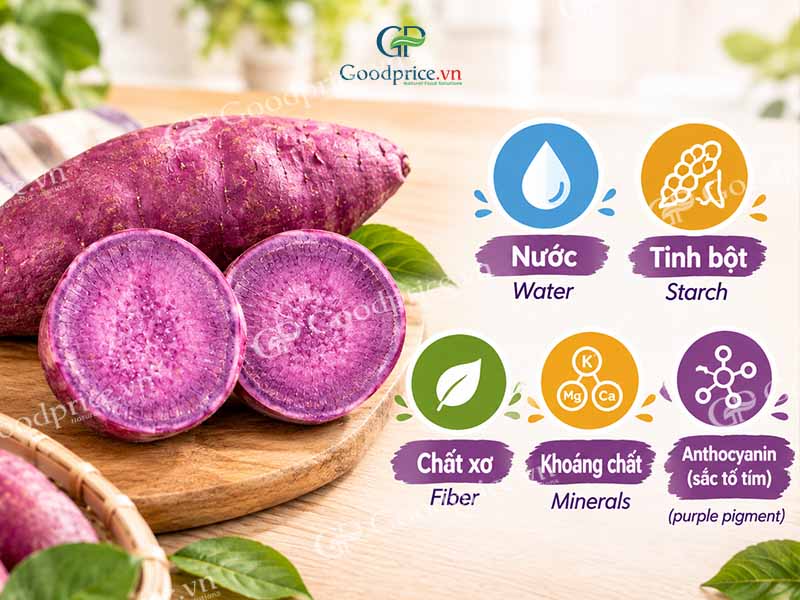
A purple sweet potato is mostly water and starchy carbohydrate. 100 g of fresh root provides about 85 kcal, along with fiber, minerals and the anthocyanin pigments that give it its color.
Its composition falls into two groups: basic nutrients and plant pigments.
Nutrition facts per 100 g
According to USDA FoodData Central and a 2024 analysis of purple-fleshed roots, 100 g of fresh purple sweet potato provides about 85 – 86 kcal.
Nutrient per 100 g, raw | Amount |
Energy | 86 kcal |
Carbohydrate | 20.1 g |
Dietary fiber | 3.0 g |
Protein | 1.6 g |
Fat | 0.05 g |
Potassium | 337 mg |
Source: USDA FoodData Central, “Sweet potato, raw, unprepared”, which covers sweet potato in general because there is no separate entry for purple-fleshed varieties.
The 2024 analysis measured 63.5 g of moisture per 100 g of purple flesh, so the root is dense and fairly dry. On a dry-matter basis, it contains about 57% starch, 16% dietary fiber, 2.3% protein and very little fat. These are the proportions that carry over when the root is dried into powder.
Two values need care:
- Vitamin A: the high vitamin A figure in the USDA entry mainly reflects beta-carotene in orange-fleshed sweet potato. It is not typical of purple sweet potato.
- Glycemic index (GI): GI changes sharply with cooking method. A human study found a GI of 84 for boiled purple sweet potato, so a low GI should not be assumed.
Anthocyanin content
The purple color comes from anthocyanins, mainly cyanidin and peonidin derivatives. A survey of 335 genotypes measured anywhere from 0 to 210 mg per 100 g of fresh root, so color strength varies from lot to lot.
Three things set these pigments apart:
- Mostly acylated: 16 of the 18 main anthocyanins are acylated, meaning organic acid groups are attached to them. These 18 compounds make up more than 90% of the root’s anthocyanins.
- More heat-stable: the acylated structure helps the purple color hold up better during cooking, baking or drying into powder, although some pigment is still lost.
- Varieties bred for color: Ayamurasaki, released in Japan in 1995, was bred specifically for higher anthocyanin content.
What are the benefits of purple sweet potato?
Purple sweet potato is studied mainly for the biological activity of its anthocyanins. Most of the evidence so far comes from laboratory and animal studies, with no clinical trials in people.
A 2024 review highlights these findings:
- Antioxidant and anti-inflammatory activity: anthocyanin extracts lowered inflammatory markers in cell models and in laboratory mice.
- Blood glucose and body weight (in mice): in mice on a high-fat diet, the anthocyanins limited rises in blood glucose and reduced weight gain. These results have not been tested in people.
- Natural fiber: 100 g of fresh root provides 3.0 g of dietary fiber.
Note: Joe Vinson’s 2012 blood pressure study is often cited as evidence for purple sweet potato. It was actually conducted on purple potatoes of the Purple Majesty variety.
How is purple sweet potato different from orange sweet potato?
The main difference is the pigment: purple sweet potato contains anthocyanins, while yellow or orange sweet potato contains beta-carotene. That difference leads to a large gap in micronutrients and in how each is used.
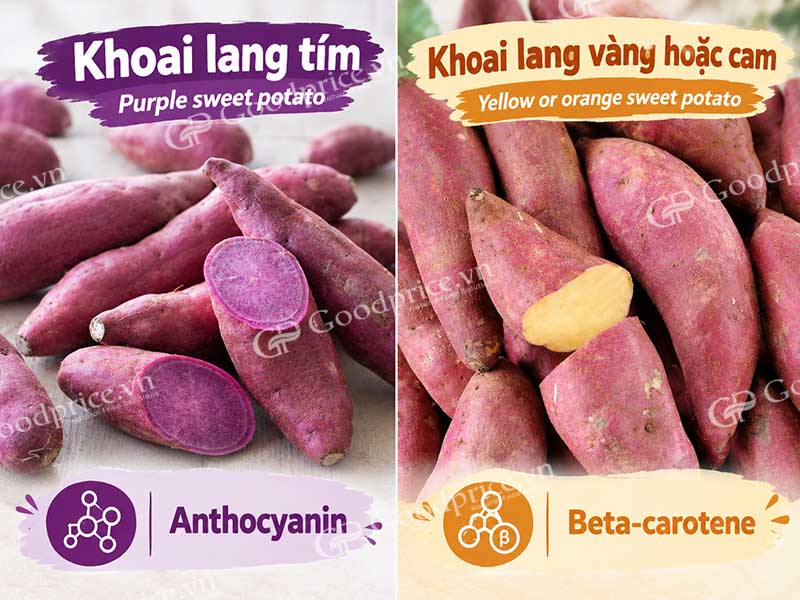
Feature | Purple sweet potato | Yellow or orange sweet potato |
Main pigment | Anthocyanins | Beta-carotene |
Flesh color | Deep purple | Yellow to deep orange |
Vitamin A | Very low (about 0.30 mg beta-carotene per 100 g dry matter) | Very high (about 709 µg RAE per 100 g raw) |
Anthocyanins | 0 – 210 mg per 100 g fresh root | Not its color source |
Use in manufacturing | Natural purple color, source of anthocyanins | Natural orange color, source of provitamin A |
Choose by purpose: for a natural purple color, use purple sweet potato; for provitamin A, choose yellow- or orange-fleshed sweet potato.
From fresh root to purple sweet potato powder
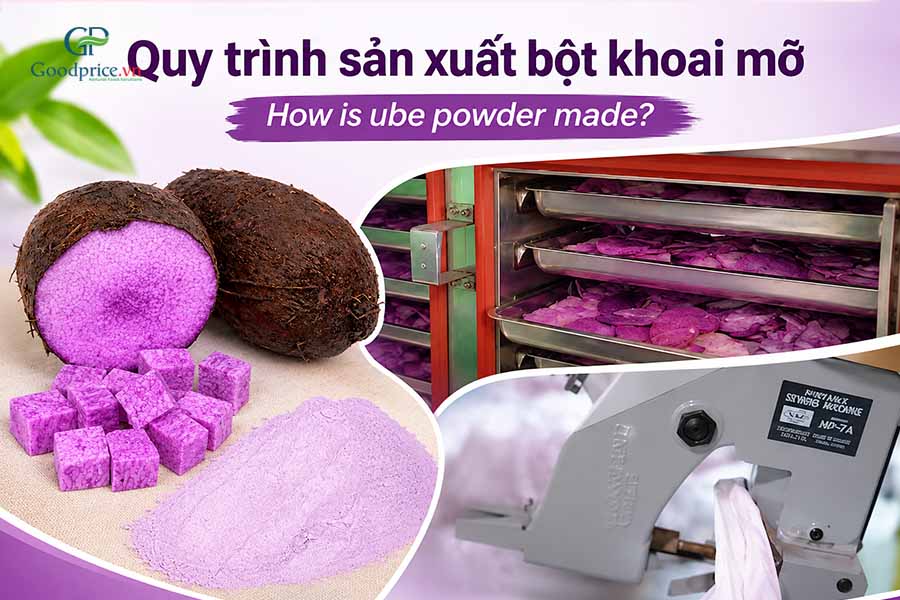
A fresh root has to be stored, shipped and prepared before it goes into production. Drying and fine milling turn purple sweet potato into a dry powder that is easy to store and dose, and that keeps its natural purple color.
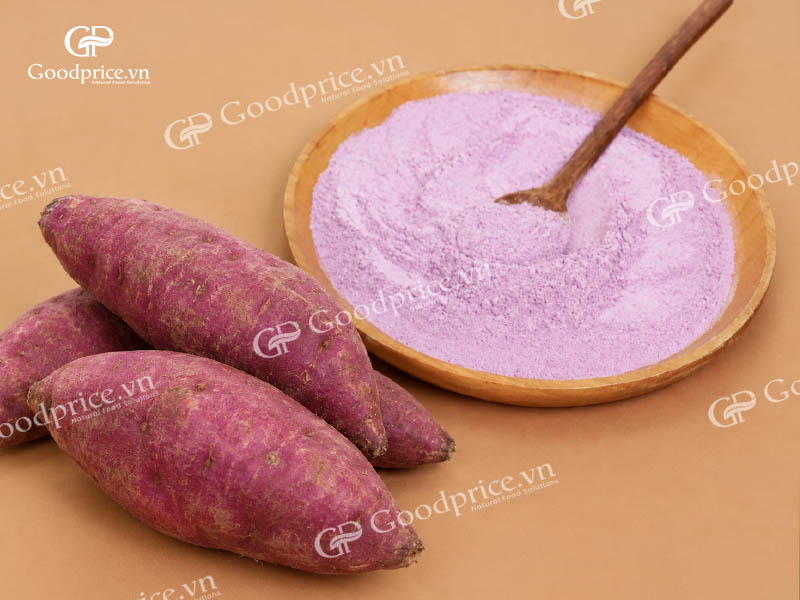
Goodprice Foods makes purple sweet potato powder in Vietnam, backed by partner growing areas and in-house R&D and OEM capability. The powder is used to add natural purple color to bakery products, beverages and noodles.
This article is general information about purple sweet potato as a food and ingredient. It is not medical or dietary advice. Nutrient values vary by variety, growing conditions and preparation. For product specifications or formulation questions, contact the Goodprice Foods team.
Frequently asked questions
What are the main purple sweet potato varieties?
The three best-known varieties are Stokes Purple, Okinawan and Ayamurasaki. Stokes Purple comes from North Carolina in the United States. Okinawan has light brown skin and purple flesh and is widely grown in Japan and Hawaii. Ayamurasaki is a Japanese variety bred for higher anthocyanin content.
What does purple sweet potato taste like?
Purple sweet potato tastes mildly sweet and nutty. Once cooked, its flesh is fairly dry and fluffy. Ube is less sweet, with a hint of vanilla and a taro-like nuttiness. The two are therefore not interchangeable.
Does purple sweet potato lose its color when cooked?
It loses some, but the flesh stays purple. Depending on the cooking method, the root keeps about 51–81% of its original anthocyanins. The acylated form helps the color hold up better under heat.
Can purple sweet potato be used as a natural food coloring?
Yes. Purple sweet potato color is a recognized natural anthocyanin colorant. Manufacturers usually use it as a dried powder or an extract to replace synthetic dyes in baked goods, confectionery and beverages.