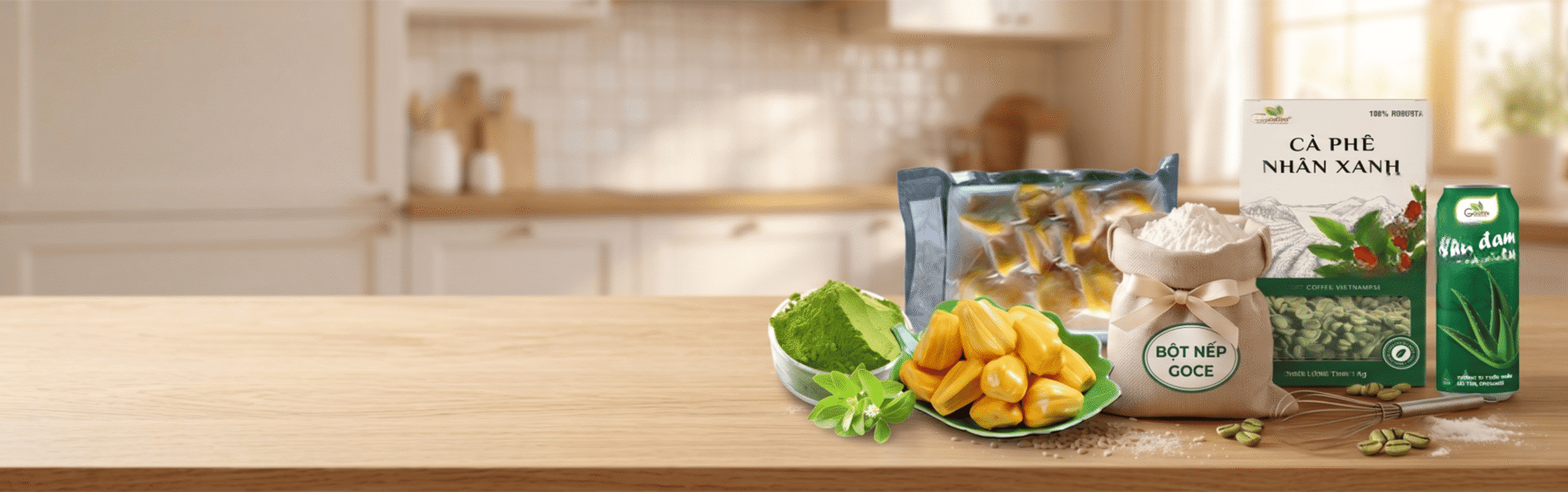
The secret to having a batch of aloe vera that is crispy, transparent, and not bitter lies in thoroughly removing the yellow sap layer and handling the slime. Apply this method to make aloe vera non-bitter right away to confidently prepare refreshing desserts and drinks for your family.
Why is aloe vera bitter, slimy, or pungent?
Before learning how to make aloe vera not bitter, you should know why aloe vera becomes bitter. The causes are:
- Yellow latex and green skin: The yellow sap layer located right next to the green skin contains anthraquinone compounds (mainly aloin). This is the main culprit causing a bitter taste and an uncomfortable feeling when eaten.
- Natural mucilage: The transparent gel section contains a high amount of mucilage; rinsing it with clean water a few times cannot completely eliminate the slippery texture.
Aloe vera that is not bitter, slimy, or pungent is due to properly cleaning off the yellow latex located next to the green skin and the transparent gel during proper preparation.
How to make aloe vera not bitter
The pungent smell of aloe vera can also be more pronounced when the leaf is still fresh or when the sap has not been thoroughly removed. Therefore, if you want aloe vera to be crispy, clear, less slimy, and easy to eat, pay attention right from the peeling and gel-cleaning steps.
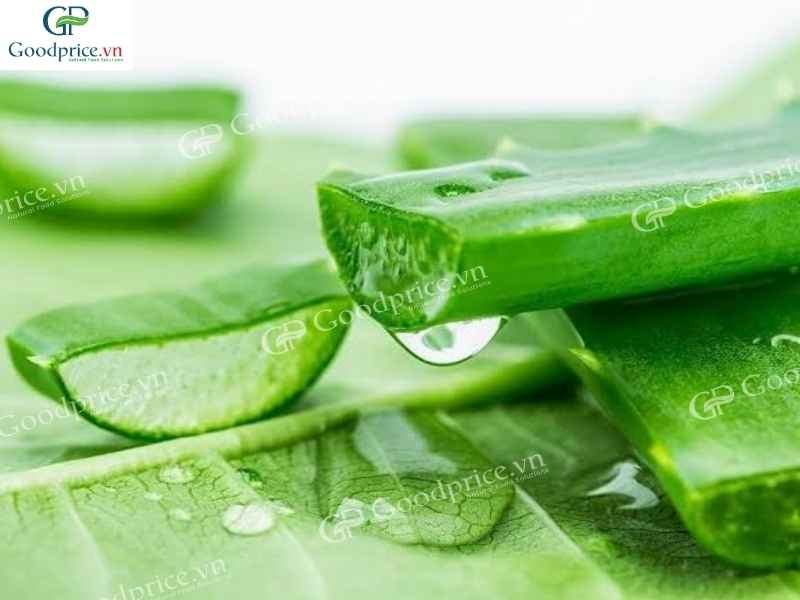
Method 1: Massage with salt and rinse repeatedly (Easiest)
- Cut off the stem, peel off the green outer skin completely. You need to peel deeply to completely remove the yellow sap border.
- Dice the clear meat into cubes or bite-sized pieces.
- Sprinkle a little coarse salt, gently squeeze by hand for about 1 minute to release the slime.
- Rinse directly under running water 3 to 5 times until the aloe vera pieces no longer feel slippery.
- Soak in a bowl of clean water for another 10 minutes, then drain.
Method 2: Blanch in boiling water
- After peeling and preliminary rinsing, drop the aloe vera into a pot of boiling water for about 30 – 45 seconds.
- Quickly scoop it out and drop it immediately into a bowl of ice water.
- Rinse once more with cool water. The sudden temperature change helps wash away excess slime and preserves the crunchy texture.
Method 3: Combine salt and fresh lemon
- Peel the skin, dice the gel into cubes.
- Gently squeeze the aloe vera with a mixture of a little salt and a few drops of lemon juice. After 1 – 2 minutes, rinse thoroughly under running water.
- Blanch quickly in boiling water, then drop into a bowl of ice water. The acid in the lemon combined with the cold ice helps the aloe vera become clear, white, and completely free of bitterness.
Method 4: Soak aloe vera in clean water multiple times
- Peel off the green skin and the yellow layer next to the skin, then cut the gel into bite-sized pieces.
- Place the aloe vera into a bowl of clean water and soak for about 10 – 15 minutes.
- Change the water 2 – 3 times, washing gently each time, finally rinse under running water and drain.
4 mistakes that make aloe vera still bitter and unpalatable after preparation
Already prepared it but the aloe vera is still bitter? You might be making one of the following mistakes:
- Not fully peeling the skin and yellow sap: Even if a tiny bit of green edge or yellow sap remains, the final product will be bitter no matter how many times you wash it.
- Inadequate washing: Stirring or squeezing the aloe vera too gently leaves the slimy gel layer clinging to the surface.
- Dirty preparation utensils: Knives, cutting boards, or baskets that are not clean or still retain smells from other foods will cause the aloe vera to absorb strange odors.
- Blanching in boiling water for too long: Blanching for too long causes the aloe vera gel to cook soft, losing its natural crunchy, chewy texture.
How to handle bitter, unpalatable aloe vera
Aloe vera condition | Common cause | How to fix |
Aloe vera is bitter | Yellow sap or skin portion was not cleaned thoroughly | Peel the skin and yellow sap carefully, then rinse multiple times with clean water |
Aloe vera is still slimy | Natural mucilage in the gel has not been washed clean | Gently squeeze with a little salt, rinse multiple times or blanch quickly then soak in cold water |
Aloe vera has a pungent smell | Sap not completely removed or the leaf is not fresh | Remove the sap portion, rinse thoroughly, and use fresh aloe vera leaves |
Aloe vera is soft, not crispy | Blanched for too long or soaked in hot water for too long | Next time, blanch quickly, then immediately soak in cold water |
Aloe vera becomes slimy again after storage | Inappropriate storage or kept for too long | Place in a clean, airtight container and store cold; use within a suitable timeframe |
Aloe vera has an unusual smell or abnormal signs | Ingredients or storage utensils not guaranteed, may have spoiled | Do not try to process it for further use; it is best to discard |
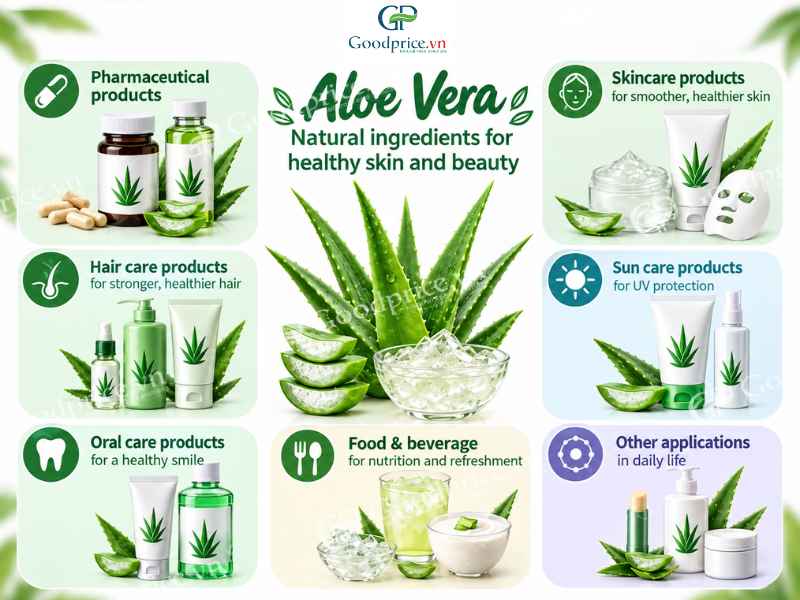
Application of aloe vera in the F&B industry
Aloe vera is a popular ingredient in beverage lines, yogurt, jellies, and desserts. However, home preparation processes cannot be applied directly at an industrial scale.
Necessary testing before commercialization
- Recipe testing: Evaluate the compatibility of aloe vera with other ingredients.
- Sensory & stability evaluation: Check the crispiness, color, flavor, and shelf life of the product.
- Pilot testing: Ensure the production line operates stably before mass production.
Why family recipes cannot be used for industrial scale?
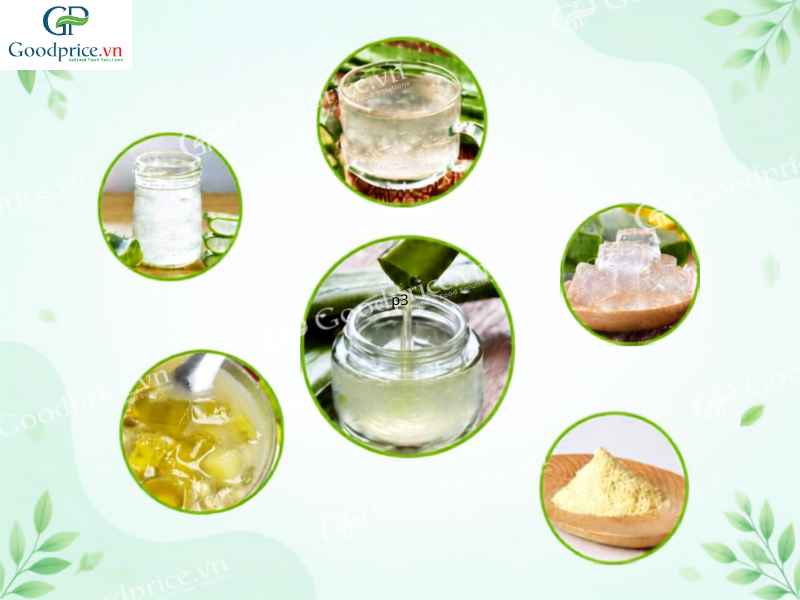
Manual home processing relies heavily on intuition. At a large scale, businesses need to standardize technical parameters (peeling ratio, cutting size, blanching temperature, processing time) to ensure consistent quality and food safety across batches.
Criteria for choosing an aloe vera beverage OEM partner
- R&D capabilities: Support recipe development and flexibly adjust test samples.
- Quality control: Modern production line meeting food safety and hygiene standards right from raw material input.
- Flexible policy: Clear on packaging, minimum order quantity (MOQ), and delivery schedule.
Conclusion
Above are the insights on how to make aloe vera not bitter, reduce slime, and maintain its natural crispiness. Not only suitable for home cooking, aloe vera is also a potential ingredient for many food and beverage products. With large-scale production demands, selecting suitable raw materials and a capable OEM partner will help businesses be more proactive in product development and commercialization.
Frequently Asked Questions (FAQ)
How long should aloe vera be soaked in salt water so it isn’t bitter?
There is no fixed time. The decisive factor is peeling off the green skin, removing the yellow sap layer, and rinsing thoroughly under running water, rather than depending solely on soaking time.
Is it necessary to soak aloe vera with lemon?
Not mandatory. Lemon only aids in cleaning the slime and enhancing whiteness. If you have peeled the yellow sap cleanly and squeezed it with salt properly, you do not need to use lemon.
How long can prepared aloe vera be stored?
At a family scale, aloe vera after preparation should be kept in an airtight container, placed in the refrigerator, and best used within 2 – 3 days.
Why is the aloe vera still bitter even after adding a lot of sugar?
Sugar only overlays a sweet taste on the tongue; it does not eliminate the aloin compound that causes bitterness. If the aloe vera is bitter, the cause lies in the peeling and sap-washing steps not meeting requirements.
How long can preprocessed aloe vera be stored?
It depends on the processing method, temperature, packaging, and hygiene conditions. For home-processed aloe vera, store it in a clean, sealed container and keep cold, prioritizing use within a short period to ensure quality.
For industrial production, it needs to be determined based on the recipe, processing workflow, packaging, and product stability test results, rather than applying a fixed time for all products.
Can this process be used to produce bottled aloe vera juice?
It should not be applied to bottled aloe vera juice production. It can only be used as a basis for developing test samples. At an industrial scale, businesses must standardize raw materials, blending ratios, processing conditions, food safety requirements, packaging, and preservation methods.