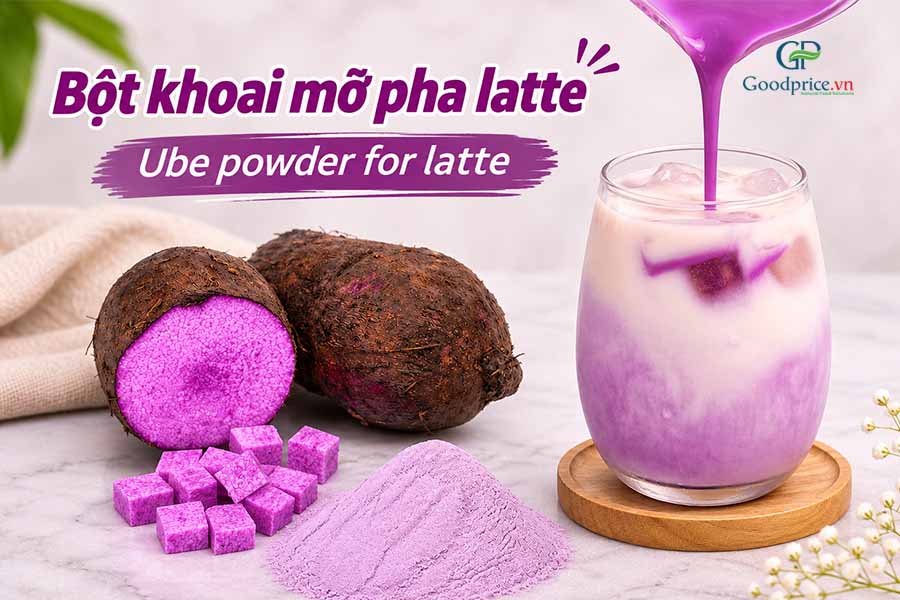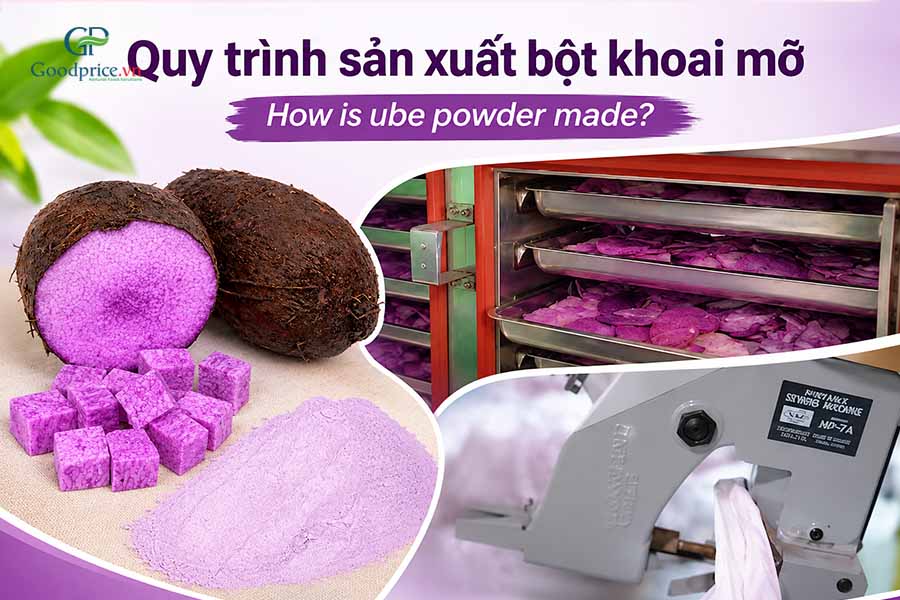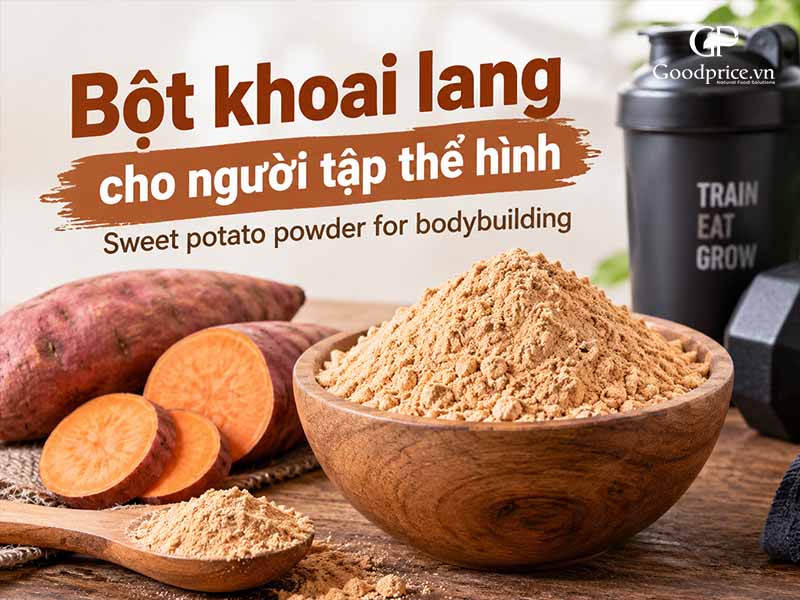
Purple sweet potato powder is made from fresh, clean purple sweet potatoes that go through washing, slicing, steaming, cold-drying and milling into a fine powder. Two steps decide how purple the final powder looks: steaming, which stops the browning enzymes, and cold-drying, which protects the anthocyanin pigment. Here is how each step works in a factory and how it compares with making the powder at home.
How is purple sweet potato powder made step by step?
In a factory, purple sweet potato powder goes through eight steps, from the field to a sealed bag:
- Selecting the roots: Fresh purple sweet potatoes are chosen from growing areas that meet quality standards. Firm, deeply colored roots give a brighter powder.
- Pre-processing and washing: Soil is removed and the roots are washed thoroughly in an automated ozone bubble washing system.
- Slicing: Machines cut the roots into thin, even slices so they cook and dry at the same speed.
- Steaming: The slices are steamed to cook the starch and lock in the purple color.
- Drying: Cold-drying removes moisture slowly while protecting the anthocyanins.
- Milling: Industrial grinders turn the dried slices into an ultra-fine powder.
- Sieving and quality control: The powder is sieved to a uniform fineness and checked before packing.
- Packaging: The powder is packed in a clean room into moisture-resistant bags with full labeling.
This is the process Goodprice Foods uses for its purple sweet potato powder in Vietnam. Each step has a clear job, but steaming and drying are the two that make the biggest difference to color.
Why is purple sweet potato steamed before drying?
Purple sweet potato is steamed before drying to stop the enzymes that turn the flesh brown. Fresh purple sweet potato contains polyphenol oxidase, an enzyme that reacts with air and causes browning. This enzyme is very active at room temperature but is damaged above about 70 °C, so a short steam inactivates it before drying starts.
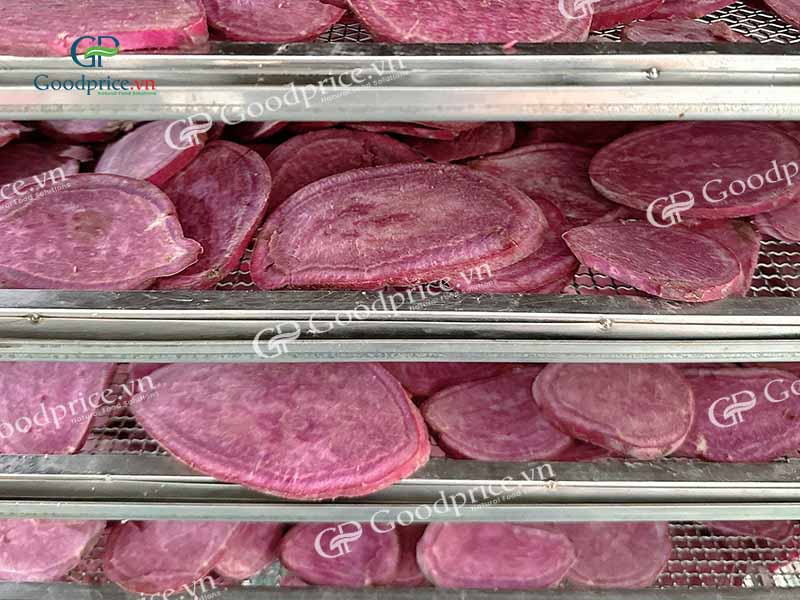
Steaming also beats boiling. When slices are blanched in boiling water, part of the anthocyanin leaks into the water, which turns purple while the slices turn brownish. Steamed slices keep more pigment, so the finished powder comes out a brighter bluish purple than powder made without steaming.
Which drying method keeps the purple color best?
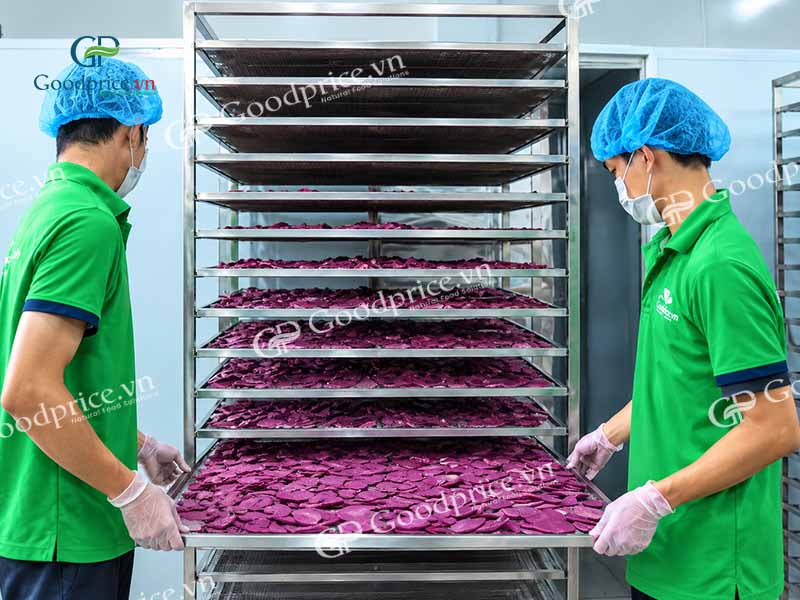
Drying methods that use lower heat or shorter contact with heat keep the most color. Here is how the common methods compare in lab tests on purple sweet potato:
Drying method | Typical heat | Effect on color and anthocyanin | Notes |
Sun drying | Outdoor sun | Largest losses, around 86 to 90% of anthocyanin | Cheap, but slow and hard to keep clean |
Hot air drying | Around 50 to 80 °C | Anthocyanin drops as temperature rises, 70 °C worked better than higher settings | Common, easy to scale |
Drum drying | Around 80 to 110 °C, very short contact | Better color than hot air drying, losses of 35 to 75% depending on variety | Fast, needs a cooked puree |
Cold-drying | Gentle heat over a longer time | Lower drying heat keeps more color | Slower, gentler on pigments |
Freeze drying | Below freezing, under vacuum | Keeps color and nutrients best | Expensive and slow, rare for bulk powder |
The pattern is clear. The longer the slices stay hot, and the hotter they get, the more anthocyanin breaks down and the duller the powder becomes. Goodprice Foods dries its powder with cold-drying for this reason.
How fine and how dry should the powder be?
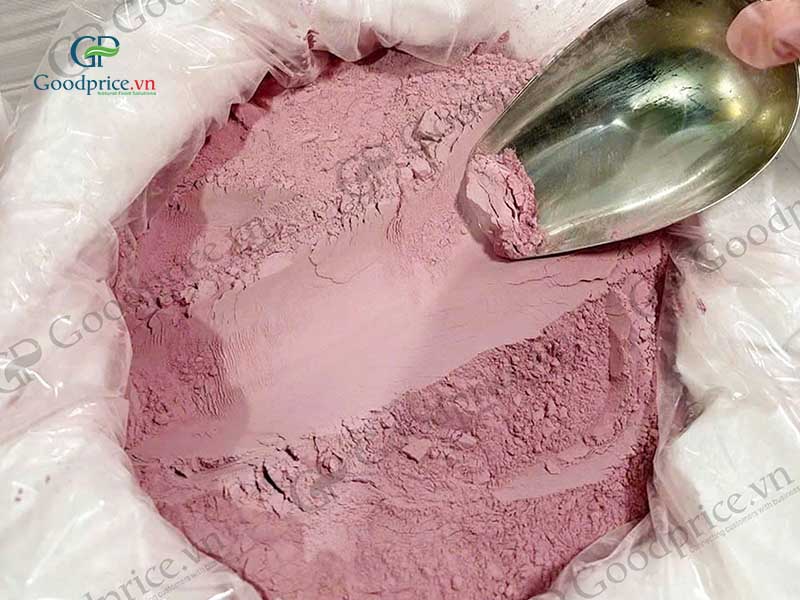
A good purple sweet potato powder for food production is milled to about 80 to 120 mesh and dried to below 10% moisture:
- Fineness: At 80 to 120 mesh, the powder blends smoothly into drinks, doughs and batters without leaving a gritty texture.
- Moisture: Keeping moisture below 10% helps the powder stay free-flowing and lowers the risk of clumping and mold during storage and shipping.
- Uniform batches: Sieving and quality checks after milling keep color and texture consistent from one lot to the next.
If you are comparing suppliers, the full checklist of what to ask for is in our guide to criteria for choosing purple sweet potato powder as a safe production ingredient.
Can you make purple sweet potato powder at home?
Yes, you can make a small batch at home by peeling, thinly slicing and steaming the roots, drying the slices in a dehydrator or a low oven until they snap, then blending and sieving them. Home powder works well for a few drinks or cakes, but it has limits:
- Color: Home ovens run hotter and less evenly than factory dryers, so the powder often turns darker or duller.
- Texture: Kitchen blenders rarely reach the fineness of an industrial mill, so expect some grit even after sieving.
- Shelf life: It is hard to know the exact moisture at home, so homemade powder clumps and spoils sooner.
- Yield: Fresh sweet potatoes are mostly water, so a large pile of roots makes only a small jar of powder.
For regular use or any product made for sale, a factory powder with tested moisture and fineness gives far more consistent results.
Frequently asked questions
How is sweet potato powder made?
Sweet potato powder is made by washing and slicing fresh sweet potatoes, cooking or steaming the slices, drying them and milling them into powder. Purple varieties need gentle drying to keep their color.
How much fresh sweet potato does it take to make 1 kg of powder?
Roughly 3 to 5 kg of fresh roots, because fresh sweet potato is about three quarters water and some weight is lost in trimming and sieving. Varieties with more dry matter need fewer roots.
Is purple sweet potato powder the same as ube powder?
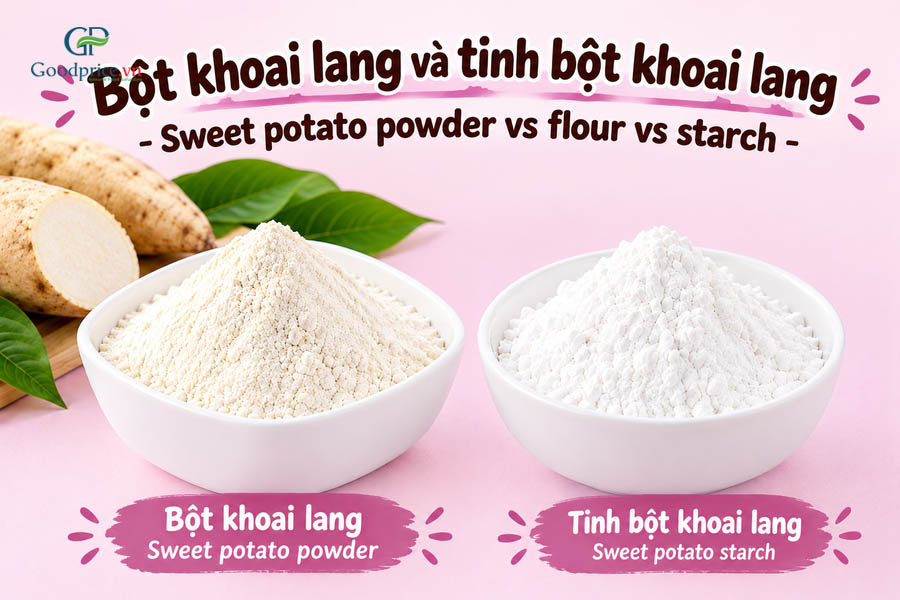
No. Purple sweet potato powder comes from purple sweet potato, while ube powder comes from purple yam, a different plant with a different taste and texture.
Is purple sweet potato powder healthy?
It is a whole-food ingredient that keeps the fiber and anthocyanin pigment of the root. How healthy it is in practice depends on how much you use and how you prepare it.
Conclusion
Purple sweet potato powder is made in eight steps, and steaming plus gentle drying are what keep it bright purple. If you need a consistent powder for food production, see the specifications, packaging and minimum order on our pure purple sweet potato powder page.
The production steps in this article describe a typical factory process and Goodprice Foods’ own process. Figures in the drying table come from lab tests and are given for reference and can vary with variety, equipment and conditions.